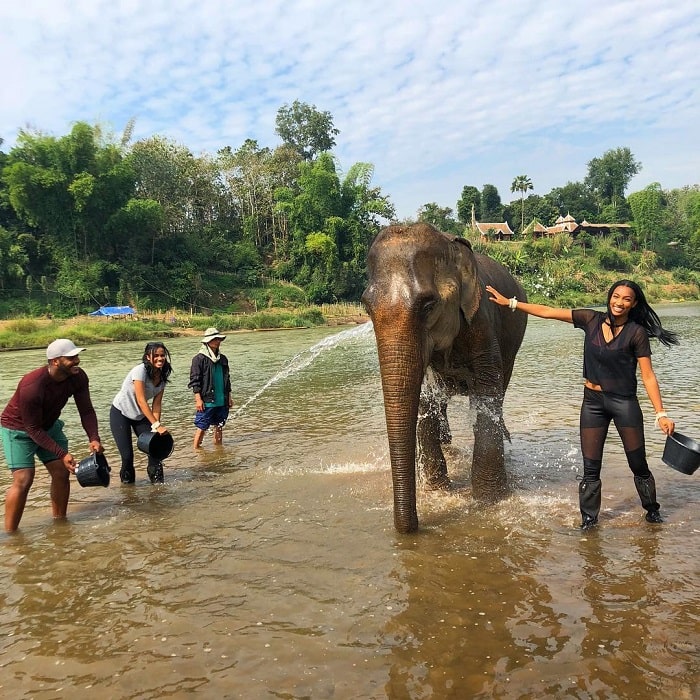






Wat Wisunarat – The Oldest Temple in Luang Prabang, Laos

Wat Wisunarat is the oldest temple in Luang Prabang, Laos, dating back to 1513. If you are interested in spiritual and cultural tourism, don’t miss Wat Wisunarat when traveling to Laos!
1. Introduction to Wat Wisunarat in Laos
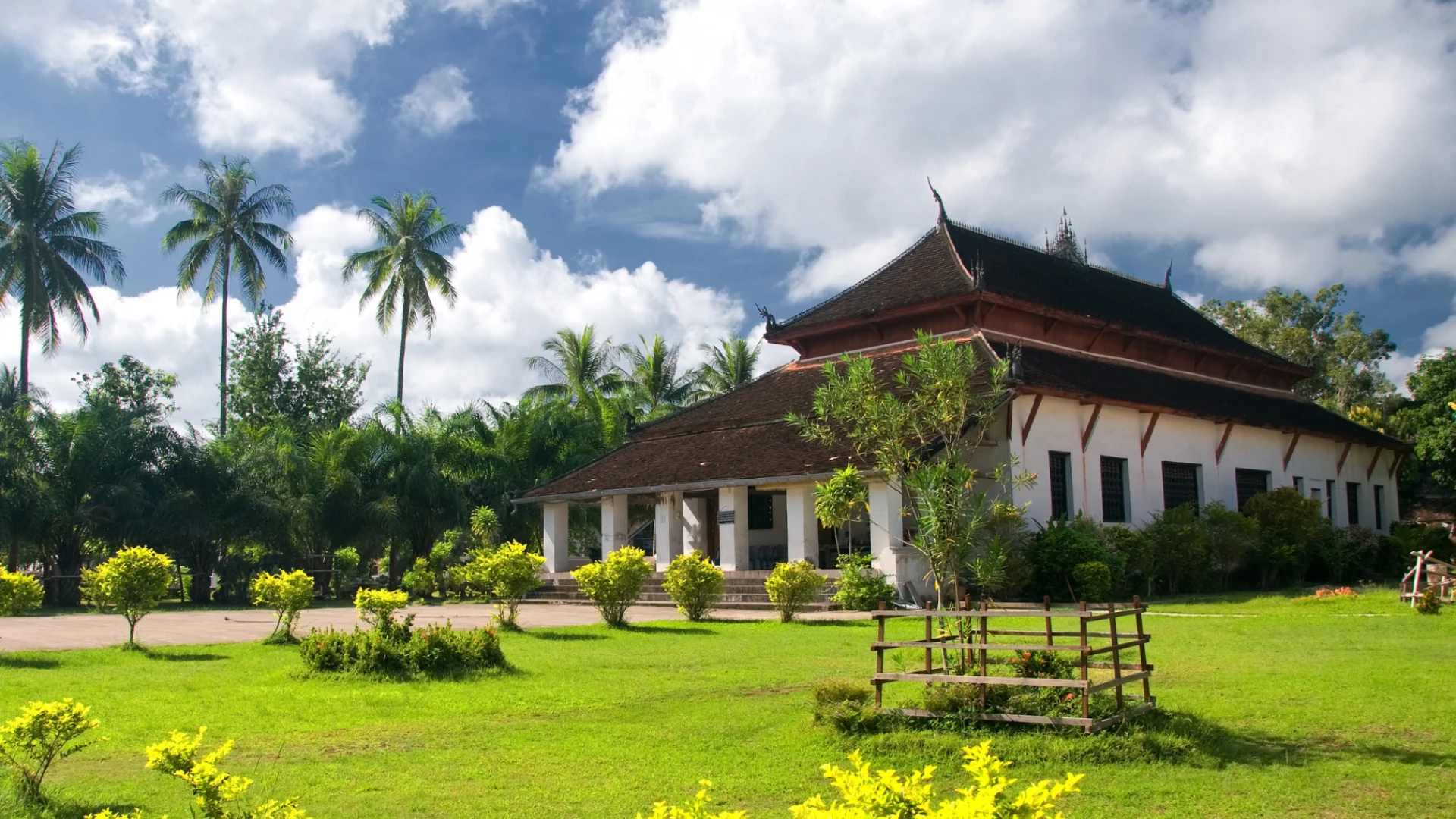
Wat Wisunarat Temple (Wat Visoun) (Photo: Collected)
Wat Wisunarat dates back to 1513 and was named after King Wisunarat (Visoun), who ruled Laos from 1501 to 1520. It is the oldest Buddhist temple in Luang Prabang and once served as the city’s Museum of Religious Art. Visitors can find religious artifacts and valuable objects associated with Buddhism and the Lao royal family at the temple.
Inside the temple are several gilded and ancient stone Buddha images dating back to the 15th century. Some of the stone images were donated by Prince Phetsarat after the invasion of the Black Haw forces.
>>> See more: If you’re planning to explore Indochina – especially the captivating country of Laos – check out Focus Asia Travel’s LAOS DISCOVERY TOUR 5D4N!
2. History of Wat Wisunarat in Laos
Dating back to 1513 during the reign of King Wisunarat (Visoun), Wat Wisunarat is the oldest temple in Luang Prabang and was once a place of worship for the sacred Prabang Buddha images. It was originally constructed from wood but was later burned down by the Black Haw cavalry in 1887. These forces were part of the Black Flag military rebellion led by a Chinese commander in the late 1880s.
Following the invasion, the temple was rebuilt using brick and plaster while retaining some of its original architectural features, including a stupa believed to have been created in 1503, along with several small Buddhist images. However, many of the sacred images were stolen during the Haw raid.
Over the years, Wat Wisunarat also served as a Museum of Religious Art and currently houses a collection of religious artifacts and valuable objects associated with both Buddhism and the Lao royal family. The temple represents an important example of traditional Lao architecture, featuring wooden windows inspired by Wat Phou in southern Laos, together with plasterwork characteristic of the classical Luang Prabang style. Restoration work was carried out in 1895 and again in 1932.
When it was first built, the temple was constructed of wood (Photo: Collected)
3. How to Get to Wat Wisunarat
Wat Wisunarat is located next to Wat Aham on Thanon Wisunalat in Luang Prabang, making it easy to reach on foot. Depending on your location, you can also take a tuk-tuk to the temple.
4. Architecture of Wat Wisunarat in Laos
One of the most distinctive features of Wat Wisunarat is its roof, which has strong European architectural influences, a style that is relatively uncommon in Laos. The temple’s main sanctuary was rebuilt during the reign of King Sakkarin Kamsuk (1894–1903). At that time, the kingdom was under French protection as a constituent kingdom of French Indochina. As a result, modern Western influences were introduced to Laos and had an impact on the architecture of the temple.
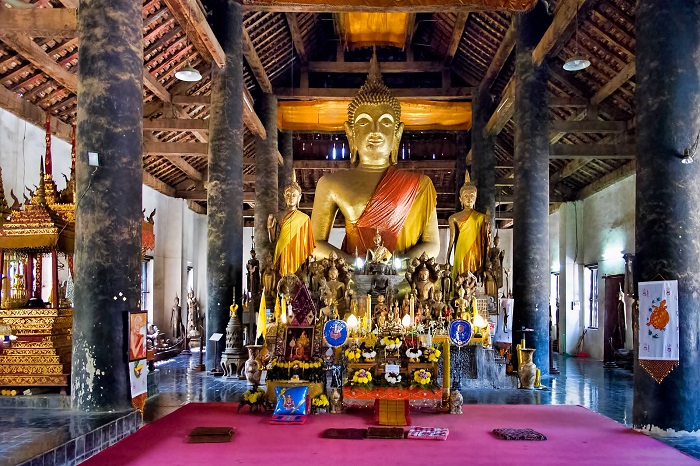
The interior space contains many Buddha statues. (Photo: Collected)
>>> See more: Transportation in Laos
5. Highlights of Wat Wisunarat in Laos
5.1. Great Lotus Stupa
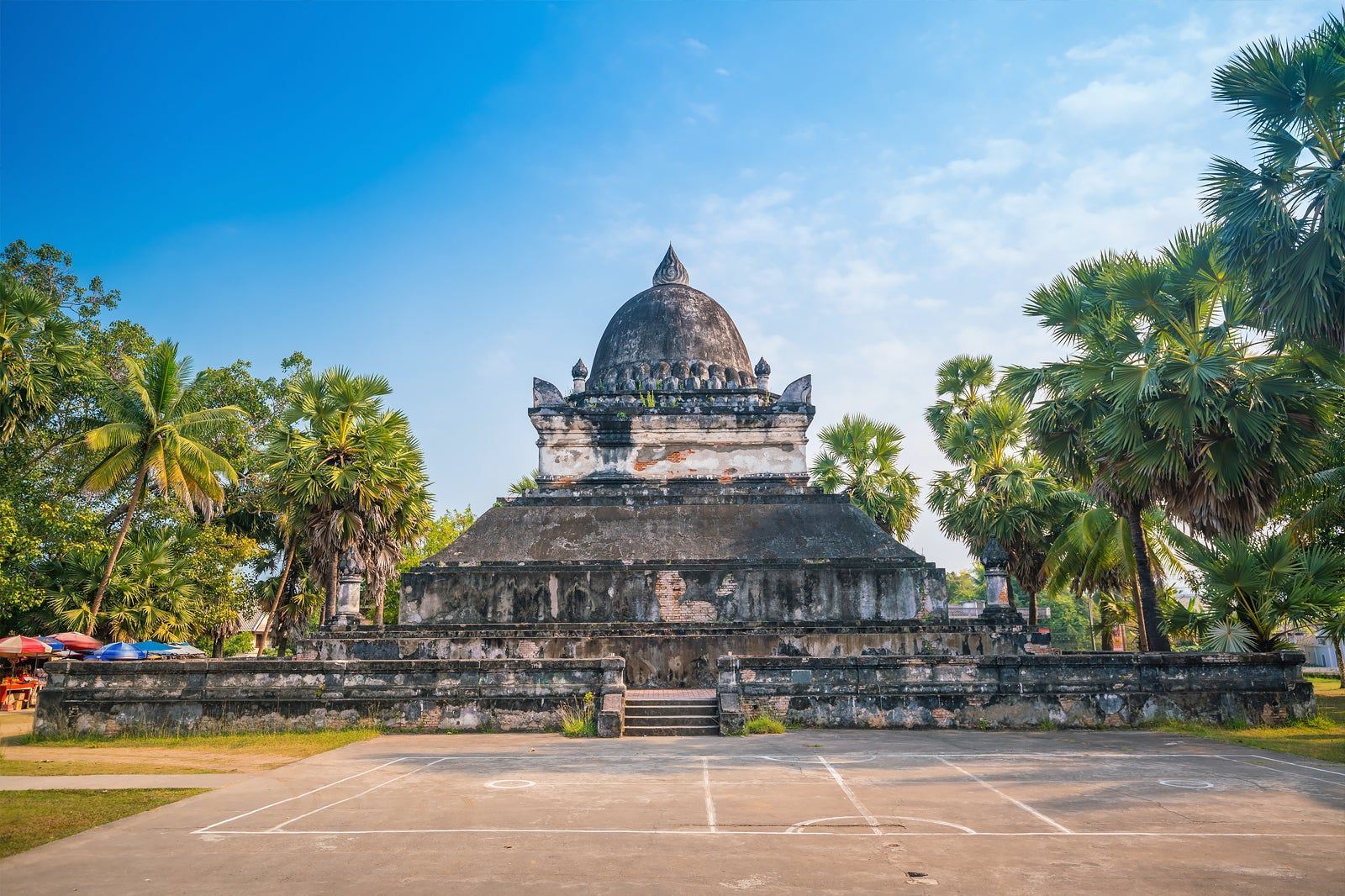
The main attraction of Wat Wisunarat is the Stupa of the Great Lotus, also known as the Great Lotus Stupa or the Watermelon Stupa, which was built in the 16th century. Standing 34.5 meters tall, the stupa features a Sinhalese architectural style and is considered unique in Laos. Locally, it is also known as the Watermelon Stupa because its dome resembles a watermelon.
This ancient structure was built as part of the original temple complex and is believed to have been intended to protect an important Buddhist relic. Today, the stupa is the only surviving original structure following attacks by the Black Flag forces on the temple and is considered one of the oldest structures in Luang Prabang.
The interior of the stupa once contained numerous small Buddha images made from precious materials and other sacred objects. Many of them were stolen or destroyed during the Black Haw raid. Some of the surviving Buddha images are preserved at the Royal Palace Museum, while others are kept and displayed in the temple’s main hall.
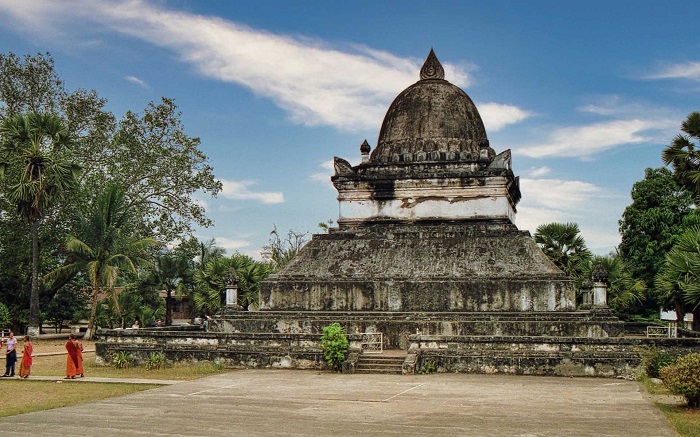
Great Lotus Stupa (Photo: Collected)
5.2. The Sim (Ordination Hall)
The Sim, or ordination hall, at Wat Wisunarat is a brick structure featuring wooden doors decorated with carvings depicting Hindu deities such as Vishnu, Brahma, Indra, and Shiva riding their respective mounts, including the sacred bull Nandi.
Inside the main sanctuary is a small collection of gilded and ancient stone Buddha images dating back to the 15th century. Among them is one of the largest standing Buddha images in the Luang Prabang style found in the city.
Inside the hall, visitors can find several information panels in both Lao and English explaining the history and symbolism of the Buddha image collection. These displays provide an opportunity to learn about different Buddha postures and understand the importance of various artistic influences on the design of the statues.
6. Things to Keep in Mind When Visiting Wat Wisunarat
When visiting Wat Wisunarat, visitors should dress modestly, covering their shoulders and knees, and remove hats and shoes before entering appropriate areas. Avoid touching monks or any Buddhist relics, and try to keep noise to a minimum throughout your visit.
- Opening hours: Daily, from 8:00 AM to 5:00 PM
- Entrance fee: 20,000 kip (US$2.50)
7. Attractions Near Wat Wisunarat in Laos
7.1. Wat Xieng Thong
Built at the command of King Setthathirath in 1560, Wat Xieng Thong is an outstanding example of traditional Lao temple architecture, featuring a distinctive two-tiered roof and intricate mosaic decorations. One of its most notable features is the beautiful glass mosaic depicting the “Tree of Life” on the rear wall of the temple.
Wat Xieng Thong is regarded as one of the most beautiful and important temples among the many elaborately decorated temples in Luang Prabang. The temple houses numerous gilded Buddha images, statues of deities, and intricately carved reliefs depicting sacred Buddhist stories and imagery.
In the past, the temple was used for the coronation ceremonies of Lao kings. It also served as a ceremonial gateway from which members of the royal family officially departed and arrived. Today, Wat Xieng Thong is one of the main venues for important annual festivals in the former royal capital of Laos.

Wat Xieng Thong (Photo: Collected)
7.2. Royal Palace Museum
Built between 1904 and 1909, the Royal Palace Museum combines Lao and French architectural styles and was ultimately completed with a more distinctly Lao design under King Sisavangvong. In the past, the building served as the Royal Palace of the Kingdom of Laos.
In 1975, the monarchy was overthrown by the communist government and the palace was converted into a museum displaying artifacts related to the history of Laos over the centuries. The museum houses an ancient Buddha image measuring 71 meters high and a room displaying gifts presented to the Lao king by foreign dignitaries.
>>> See more: Vang Vieng – A Peaceful and Dreamy Town in Laos
7.3. Mount Phousi
Regarded as the sacred hill of Luang Prabang, Mount Phousi is one of the most revered sites in the city. From the summit, visitors can enjoy breathtaking panoramic views of Luang Prabang and the surrounding landscape.
Several notable temples are located on and around the hill, including Wat Tham Phousi, which features a large reclining Buddha, and Wat Chomsi. Visitors should be prepared for a physical climb, as reaching the summit involves ascending 329 steep steps.

Mount Phousi in Luang Prabang (Photo: Collected)
7.4. Kuang Si Falls
Kuang Si Falls is one of the most famous attractions in Luang Prabang. The site impresses visitors with its peaceful natural beauty and spectacular waterfalls, which cascade approximately 50 meters through three levels of limestone formations.
Visitors can cool off by swimming in the turquoise pools beneath the falls or climb higher to enjoy the beautiful scenery surrounding the area. Be sure to wear suitable footwear to avoid slipping on wet and uneven surfaces.
With its long history and significant religious and cultural values, Wat Wisunarat continues to attract increasing numbers of local and international visitors.
>>> See more articles:
Laos Travel – Hidden Beauty and Captivating Destinations Every Traveler Should Explor
Wat Ong Teu in Vientiane, Laos
Discover Khoun Kong Leng Lake, Laos’s mesmerizing emerald-blue lake