






The Beauty of Wat Phou, the Oldest Temple in Laos

If you are someone who loves ancient beauty and adventurous travel, the thousand-year-old Wat Phou temple in Laos is a destination you should visit at least once in your lifetime.
Wat Phou is a temple complex that dates back thousands of years. It is considered a historical witness that has stood through the many ups and downs of the beautiful country of Laos. With its ancient architecture and distinctive blend of cultural influences from different eras, this thousand-year-old temple attracts both local people and international visitors every year.
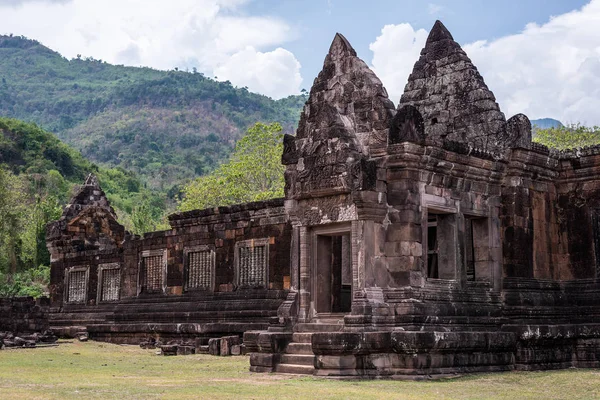
Wat Phou is nestled against the slopes of Phou Kao Mountain (Elephant Mountain). (Photo: Collected)
To learn more about this remarkable historical site, Wat Phou, let’s explore it through the following article.
1. Where Is Wat Phou Located?
Wat Phou is located near Pakse, in Champasak Province, southwestern Laos, close to the borders with Thailand and Cambodia. This ancient temple was built in the late 10th or early 11th century. It was originally constructed as a place of worship dedicated to the Hindu god Shiva. Later, Wat Phou was transformed by the ancient Khmer into a center of Theravada Buddhism.
Wat Phou has a particularly impressive location, with its back facing Phou Kao Mountain, also known as Elephant Mountain, and its front facing the Mekong River, approximately 6 km away. With a history spanning thousands of years, Wat Phou is one of the places where important cultural and historical values of Laos are preserved. The Wat Phou cultural landscape is recognized by UNESCO as a World Heritage Site.
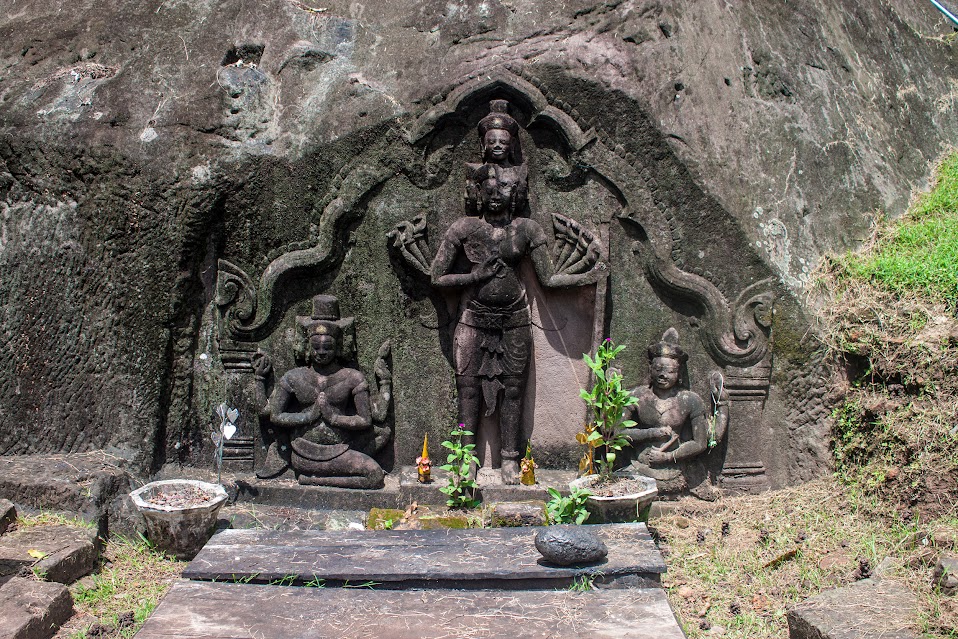
Intricate carving of the Hindu god Shiva at Wat Phou. (Photo: Collected)
2. The Best Time to Visit Wat Phou
Laos has a tropical monsoon climate, quite similar to that of Vietnam, with two distinct seasons: the rainy and dry seasons. The rainy season lasts from May to October, while the dry season extends from November to March of the following year. This is also the coolest period of the year, so the destination tends to attract large numbers of tourists during this time.
You can visit Wat Phou during the dry season for the most comfortable and reliable sightseeing experience.
3. How to Get to Wat Phou, Laos
As Laos is a neighboring country of Vietnam, there are several ways to travel to the famous Wat Phou temple.
3.1. Getting to Pakse, Champasak
By Bus
There are currently several bus operators in Vietnam offering routes to Pakse, Laos. From Ho Chi Minh City, you can take a direct bus to Pakse, covering a distance of approximately 600 km, with fares starting at around VND 800,000.
For travelers from Hanoi, you can take a flight to Ho Chi Minh City and then continue by bus to Pakse, Laos. Vietjet currently offers various promotions for domestic flights, including fares from VND 0 during the 12:00–14:00 period each day. See the details HERE.
By Air
Pakse is served by Pakse International Airport, making it possible to travel directly to Pakse by air before visiting Wat Phou.
You can choose Vietjet for a convenient journey to Pakse. Vietjet currently operates several direct flights to Vientiane, the capital of Laos, with fares starting from just VND 240,000.
From Vientiane, there are several ways to travel to Pakse:
By air: After arriving at Wattay International Airport in Vientiane, you can purchase a flight ticket to Pakse International Airport. This is a domestic route in Laos, operated by different airlines with varying schedules. The flight takes approximately 2 hours.
By bus: Several bus routes connect Vientiane with Pakse. You can purchase tickets at Talat Sao Bus Station, the central bus station in Vientiane. The journey takes approximately 10–12 hours, depending on traffic and road conditions. Bus fares range from around LAK 200,000 to LAK 300,000.
3.2. Getting from Pakse to Wat Phou
From Pakse, there are several ways to reach Wat Phou. The temple is approximately 50 km away, and the journey takes about 1 hour. You can travel by taxi, rent a car, or choose a more affordable and unique option by taking a tuk-tuk.
On the way to Wat Phou, you will have the opportunity to travel along the Mekong River and admire the magnificent surrounding scenery.
4. Exploring the Thousand-Year-Old Wat Phou Temple
4.1. Admiring the Ancient Architecture of the Thousand-Year-Old Temple
With a history spanning more than a thousand years, Wat Phou bears the marks of time through its ancient architecture, which has witnessed countless changes throughout the history of Laos. Before reaching the main temple area, visitors can walk through the museum, which preserves more than 100 finely carved ancient statues.
As the temple was originally built to worship the Hindu god Shiva, Wat Phou underwent changes over the centuries and now reflects a fascinating blend of ancient Khmer culture and Hindu traditions. As you admire each stone, intricate carving, and carefully arranged architectural element, you will be amazed by the skill and immense effort of the artisans who devoted themselves to building this remarkable temple centuries ago.
4.2. A Prime Location for Admiring the Majestic Natural Landscape
Wat Phou is believed to occupy an exceptionally scenic location, with its back resting against Phou Kao Mountain and its front facing the Mekong River. Here, visitors can enjoy breathtaking views, with the legendary river stretching out in front and the sacred Phou Kao Mountain rising majestically behind.
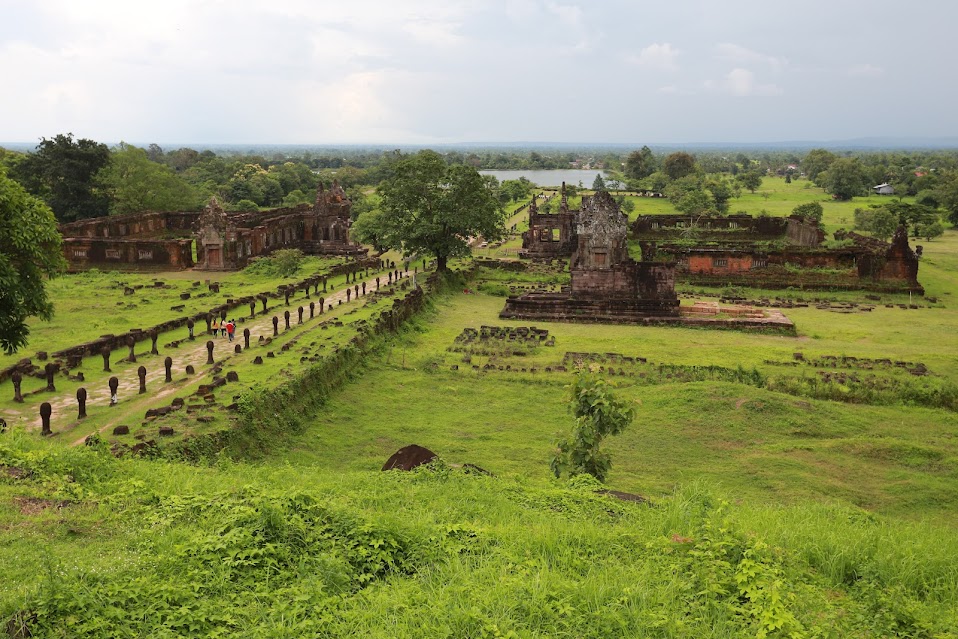
Panoramic view of Wat Phou, a UNESCO World Heritage Site. (Photo: Collected)
The harmonious combination of forests, mountains, rivers, and centuries-old architecture creates an enchanting landscape that is both poetic and awe-inspiring.
4.3. Wat Phou Festival
If you visit Wat Phou around the full moon of the third lunar month, you will have the opportunity to join the crowds celebrating the Wat Phou Festival. It is an important Buddhist festival in southern Laos and one of the major traditional festivals in the country.
During the three-day Wat Phou Festival, visitors can enjoy activities such as boat races, buffalo fighting, traditional music and dance performances, and fireworks. Buddhist ceremonies are also an essential part of the festival.
5. Travel Tips for Visiting Wat Phou
5.1. What to Prepare and Keep in Mind When Visiting Wat Phou
Wat Phou has a hot and dry climate similar to that of Vietnam. Therefore, when visiting the temple, travelers should prepare hats, sunglasses, and lightweight, breathable clothing that absorbs sweat well.
As Laos is a neighboring country of Vietnam, Vietnamese citizens do not need a tourist visa and are eligible for a visa-free stay of up to 30 days.
Required documents include a passport valid for at least 6 months, a Vietnamese Citizen Identity Card, and other personal identification documents.
5.2. Accommodation in Pakse
Pakse is the fourth-largest city in Laos and offers a wide range of accommodation options to suit different budgets. You can choose budget guesthouses for more affordable stays. There are also modern resorts and hotels in prime locations, including properties overlooking the Mekong River, which are ideal for travelers seeking tranquility and spectacular views of the surrounding natural landscape.
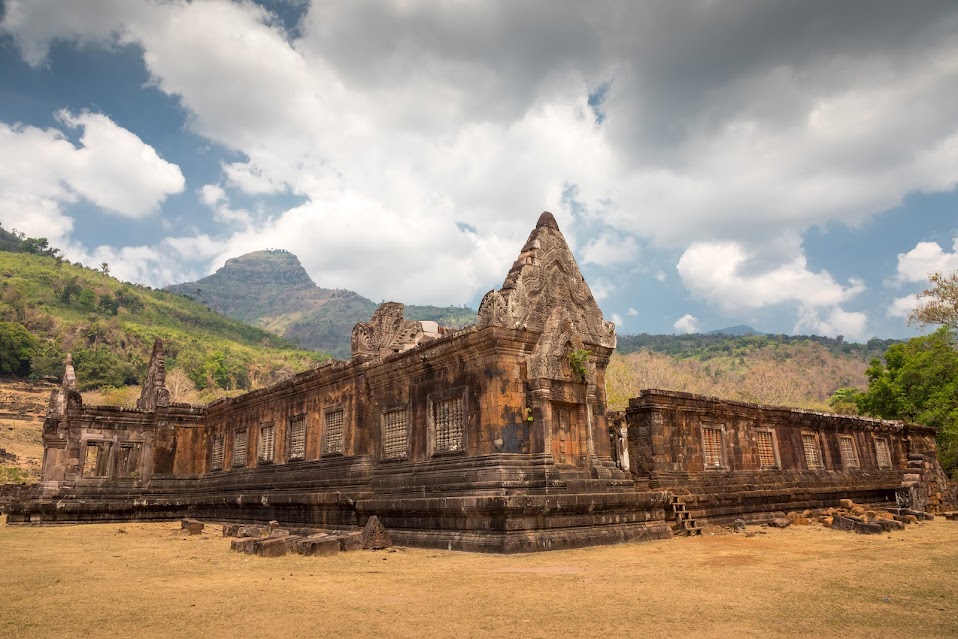
Wat Phou exudes a mysterious beauty that attracts many visitors to explore. (Photo: Collected)
5.3. Some Attractions Around Wat Phou
When visiting Wat Phou, you can stay in Pakse for a few days and combine your trip with visits to the following destinations to create a memorable Laos tour:
- Wat Phou Salao: This is a destination you should not miss when visiting Pakse. The temple is located on a large hill, offering panoramic views of Pakse and the vast Mekong River. The site is also home to a giant Buddha statue facing the Mekong River, making it a popular spot for visitors to take photos.
- Bolaven Plateau: Located in the northeastern part of Champasak Province, the Bolaven Plateau is particularly impressive for its famous waterfalls, including Tad Fane Falls, as well as its lush green coffee plantations.
- Si Phan Don: In Lao, Si Phan Don means “Four Thousand Islands.” It is located along a section of the Mekong River where the river widens to more than 1 km and stretches for approximately 14 km. Si Phan Don offers a picturesque and tranquil landscape that remains relatively unspoiled, with thousands of islands of different sizes scattered across the river.
Ready to Discover the Hidden Beauty of Laos?
If you’re planning to explore the heart of Indochina—especially the enchanting country of Laos—consider joining our NORTH VIETNAM & LAOS – 13 DAYS TOUR for an unforgettable journey. Experience the timeless charm of ancient temples, majestic mountains, untouched nature, breathtaking landscapes, and the warm hospitality that makes the Lao people so welcoming. Let Focus Asia Travel help you discover the very best of Laos with a carefully designed itinerary and professional travel services.
Contact Focus Asia Travel for a FREE consultation:
Hotline: +84 793 113 879 / +84 78 2323 879 / +84 93 645 9995 / +84 93 617 9995
Email: customer@focusasiatravel.com / sales@focusasiatravel.vn
Websites: