





Wat Xieng Thong: A Sacred Ancient Temple with Impressive Architecture

Wat Xieng Thong is one of the most famous temples in Luang Prabang, renowned for its timeless atmosphere and striking architectural details. It is an ideal destination for travelers who want to experience the rich and colorful cultural heritage of Laos.
If you are passionate about cultural tourism and enjoy discovering sacred destinations in Laos, consider adding Luang Prabang to your next journey. This charming city is home to some of the finest cultural treasures in the country. Among its most celebrated landmarks is Wat Xieng Thong. Let’s explore why this historic temple continues to attract travelers from around the world.
1. Wat Xieng Thong – The Temple of the Golden City in Luang Prabang
1.1 An Introduction to Wat Xieng Thong
Wat Xieng Thong, also known as the Temple of the Golden City, is one of the oldest and most significant temples in the cultural and Buddhist heritage of Luang Prabang, Laos. Located near the confluence of the Mekong River and the Nam Khan River, the temple has long been influenced by the diverse cultural traditions of the region.
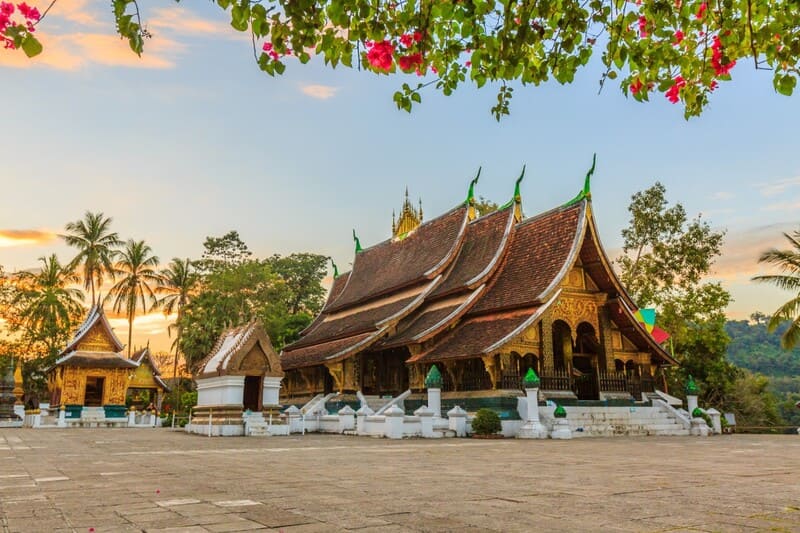
Wat Xieng Thong is the oldest and most important temple in the cultural and Buddhist heritage of Luang Prabang. (Photo: Collected)
The name Wat Xieng Thong is often interpreted as “Temple of the Golden City” or “Monastery of the Golden Tree,” reflecting the temple’s magnificent appearance and grand architectural character. Located within the UNESCO World Heritage Site of Luang Prabang, Wat Xieng Thong attracts visitors who wish to admire its architecture and discover an important part of Lao cultural heritage.
Despite its long history and popularity among travelers, Wat Xieng Thong has retained its solemn beauty and tranquil atmosphere. The peaceful surroundings create a sense of serenity, allowing visitors to slow down, relax, and enjoy a moment of quiet reflection.
1.2. The History of Wat Xieng Thong
Wat Xieng Thong was founded in 1560 under the reign of King Setthathirath, one of the most prominent monarchs of the Lan Xang Kingdom. During this period, Buddhism played a central role in the spiritual life of the local population, and Wat Xieng Thong became an important symbol of Theravada Buddhist faith.
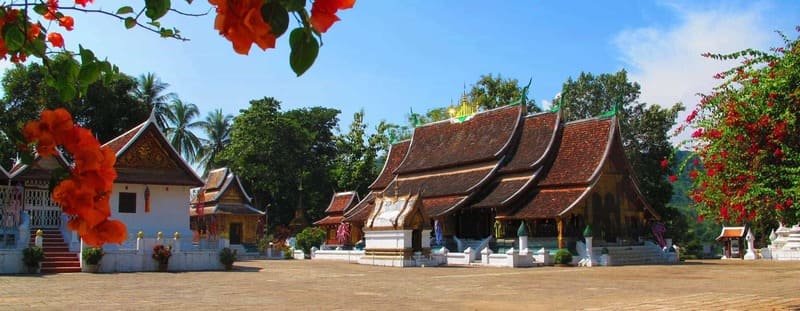
Wat Xieng Thong in Luang Prabang was founded in 1560. (Photo: Collected)
2. Things to Know Before Visiting Wat Xieng Thong
2.1. Best Time to Visit
Wat Xieng Thong can be visited throughout the year. However, MIA.vn recommends visiting in the late afternoon, when the peaceful landscape of Luang Prabang is bathed in the warm golden light of sunset.
At this time of day, the temple’s distinctive architecture takes on an especially enchanting appearance, creating a serene and atmospheric setting for sightseeing and photography.
2.2. How to Get to the Temple
Wat Xieng Thong is located at the northern tip of the Luang Prabang peninsula, between Sakhalin Road and Khem Khong Road.
From the historic center of Luang Prabang, the temple is only a short walk away. If your accommodation is farther from the Old Town, you can rent a bicycle or motorbike, or take a tuk-tuk to reach the temple.
2.3. Entrance Fee and Opening Hours
Entrance Fee
According to information updated by MIA.vn in 2024, the standard entrance fee for Wat Xieng Thong was approximately 20,000 Lao Kip. This ticket generally allows visitors to explore the temple’s main areas.
Opening Hours
Wat Xieng Thong is generally open daily from 8:00 AM to 6:00 PM. However, opening hours may change during special religious ceremonies, festivals, or other events. It is advisable to check the latest information before visiting to avoid unexpected changes to your itinerary.
3. Discover the Striking Architecture of Wat Xieng Thong
Wat Xieng Thong is one of the most significant architectural landmarks in Luang Prabang. Each structure within the temple complex has its own artistic and religious significance. Let’s explore some of the most distinctive architectural features of Wat Xieng Thong.
3.1. The Sim – A Magnificent Main Sanctuary
The Sim, or main sanctuary, is considered the architectural centerpiece of Wat Xieng Thong. The building is decorated with intricate motifs and exceptionally detailed carvings, showcasing the refined craftsmanship of traditional Lao architecture.
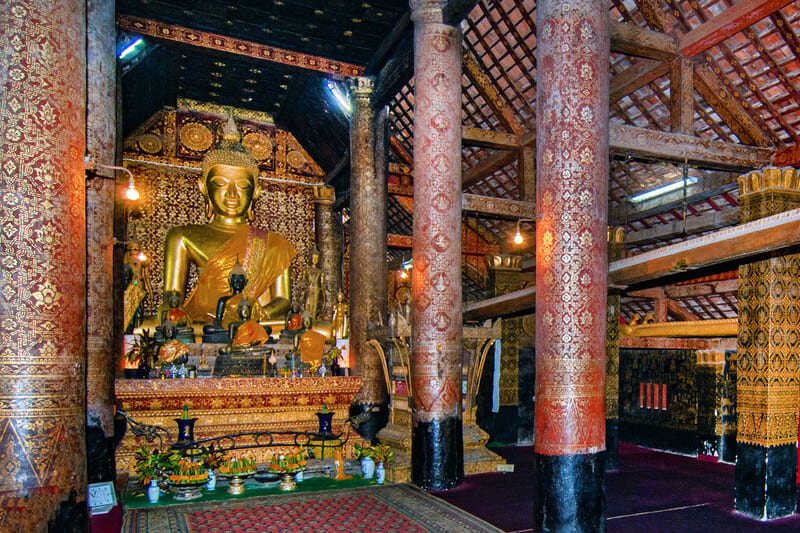
The Sim, or main sanctuary, stands out with its intricate and exquisite carvings. (Photo: Collected)
It also serves as an important spiritual space where monks come to meditate, pray, and conduct Buddhist ceremonies.
3.2. A Complex of Atmospheric and Sacred Chapels
Beyond the main Sim, Wat Xieng Thong contains several smaller chapels, each with its own distinctive architectural style and religious significance.
The Red Chapel, known for its vibrant exterior, houses a rare reclining Buddha image. Another chapel, known for its standing Buddha image, features a tall statue with profound religious significance.
Together, these smaller chapels create a peaceful environment for worship and contemplation, allowing visitors to gain a deeper insight into the spiritual traditions of Laos.
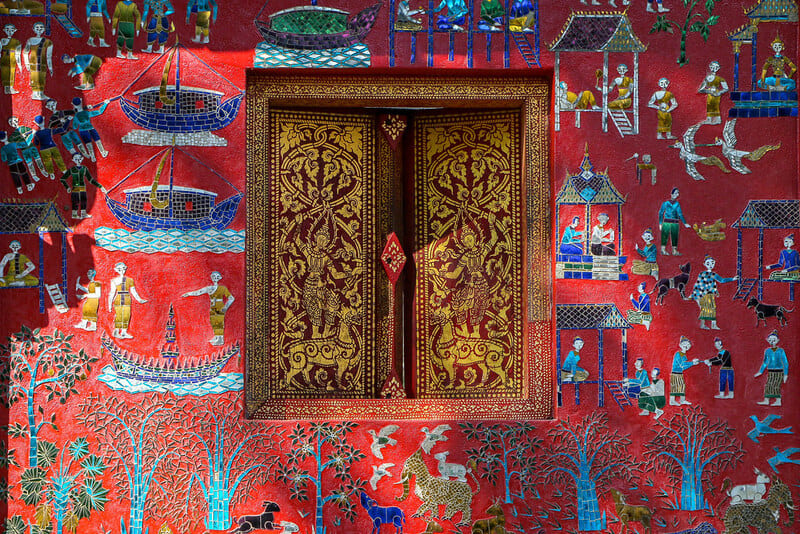
Wat Xieng Thong features a complex of smaller chapels with profound religious significance. (Photo: Collected)
3.3. Ho Trai – The Temple Library with a Unique Structure
Ho Trai, the temple library, features a distinctive elevated structure designed to protect valuable Buddhist manuscripts and religious texts.
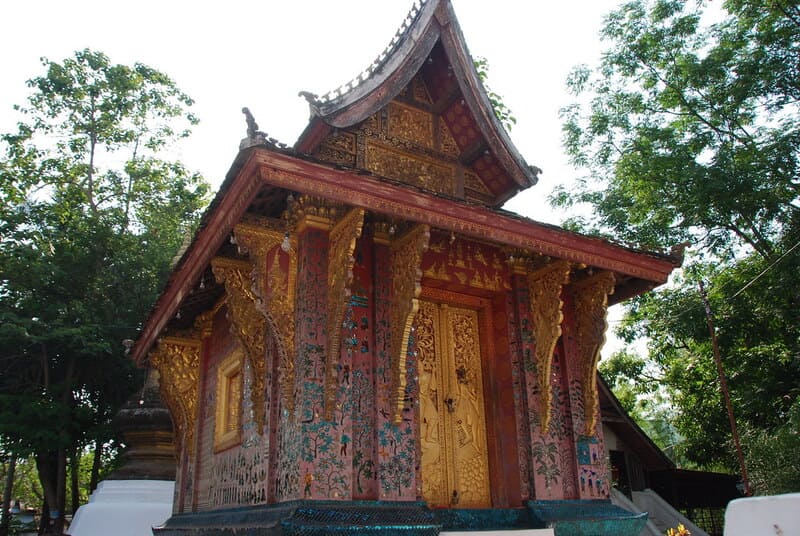
Ho Trai, the temple library, features a distinctive and remarkable architectural structure. (Photo: Collected)
The library was raised above the ground on wooden pillars to protect its contents from termites and humidity. This traditional design helped preserve important religious knowledge and manuscripts for generations.
3.4. The Drum Tower and Crematorium
The tall drum tower is decorated with intricate carvings and contributes to the solemn atmosphere of the temple complex.
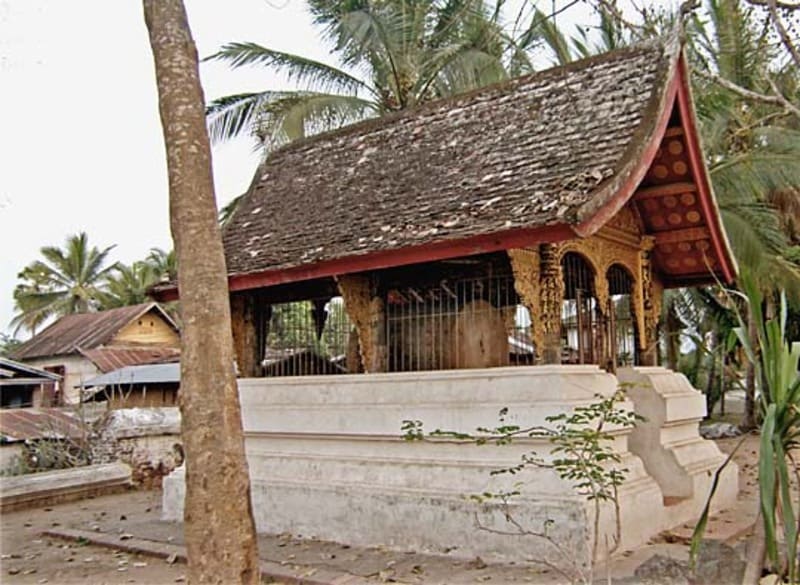
The drum tower and crematorium hold special significance within Wat Xieng Thong. (Photo: Collected)
Nearby, the crematorium is designed with a dignified and respectful architectural style, providing a sacred final resting place for the deceased and reflecting the important role of Buddhist traditions in Lao society.
3.5. Colorful Decorative Motifs Rich in Cultural Meaning
Wat Xieng Thong is filled with intricate decorative details that showcase the artistic traditions of Laos.
Visitors can admire finely carved wooden panels and elaborate motifs depicting stories from Lao history, culture, and Buddhist traditions. One of the temple’s most famous artistic features is the celebrated “Tree of Life” mosaic, which adds a vibrant and symbolic element to the temple complex.
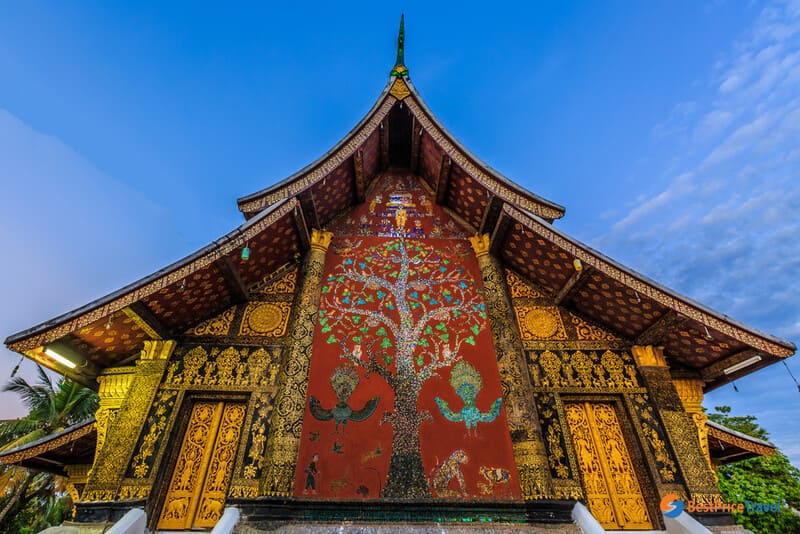
The famous “Tree of Life” mosaic can be found within the grounds of Wat Xieng Thong. (Photo: Collected)
4. Important Tips for Visiting Wat Xieng Thong
As an important religious site, Wat Xieng Thong has several rules that visitors should follow to ensure a respectful and enjoyable experience.
- Photography is permitted in most areas of Wat Xieng Thong. However, visitors should pay attention to signs indicating where photography is prohibited, particularly inside sacred spaces.
- Dress respectfully when visiting the temple. Avoid revealing clothing and short skirts or shorts. Remember to remove your shoes before entering the main sanctuary to pay your respects.
- Keep your voice low and maintain a peaceful atmosphere, especially in areas where visitors are praying or meditating. This helps preserve the temple’s tranquility and ensures that worshippers are not disturbed.
Wat Xieng Thong is a sacred landmark that should not be missed when exploring Luang Prabang. Its mystical atmosphere, remarkable architecture, and rich cultural heritage make it an ideal destination for travelers who want to discover the colorful traditions of Laos. Be sure to include this historic temple in your itinerary when visiting Luang Prabang.
Ready to Discover the Hidden Beauty of Laos?
If you’re planning to explore the heart of Indochina—especially the enchanting country of Laos—consider joining our NORTH VIETNAM & LAOS – 13 DAYS TOUR for an unforgettable journey. Experience the timeless charm of ancient temples, majestic mountains, untouched nature, breathtaking landscapes, and the warm hospitality that makes the Lao people so welcoming. Let Focus Asia Travel help you discover the very best of Laos with a carefully designed itinerary and professional travel services.
Contact Focus Asia Travel for a FREE consultation:
Hotline: +84 793 113 879 / +84 78 2323 879 / +84 93 645 9995 / +84 93 617 9995
Email: customer@focusasiatravel.com / sales@focusasiatravel.vn
Websites: