



UNIQUE AND DISTINCTIVE FEATURES OF LAO CULTURE – THE LAND OF A MILLION ELEPHANTS (PART 2)

Lao culture is a colorful tapestry where traditional values and national identity blend together, creating a rich and distinctive cultural heritage. When traveling to Laos, visitors have the opportunity not only to admire spectacular natural landscapes and ancient architecture but also to experience the country’s rich culture through its unique festivals, customs, and traditions.
1.8. Xou Khouan and the Wrist-Tying Ceremony (Phouk Khen)

Xou Khouan Ceremony (Photo: Collected)
Xou Khouan is a simple yet sacred and solemn ritual that is widely practiced among the people of Lao villages and communities. A Xou Khouan ceremony can be performed with only a candle, flowers, a bowl of rice, and a white thread, symbolizing the calling back of one’s spirit.
The ceremonial tray (pha khouan), the ritual specialist (mo khouan), and the words and wishes expressed during the ceremony (xout khouan) are all important elements with both spiritual and ritual significance.
Phouk Khen requires only a few offerings, such as a boiled egg, ripe bananas, a handful of rice, and white threads. During the ceremony, Lao people tie white threads around a guest’s wrist as an expression of sincerity, care, and trust.
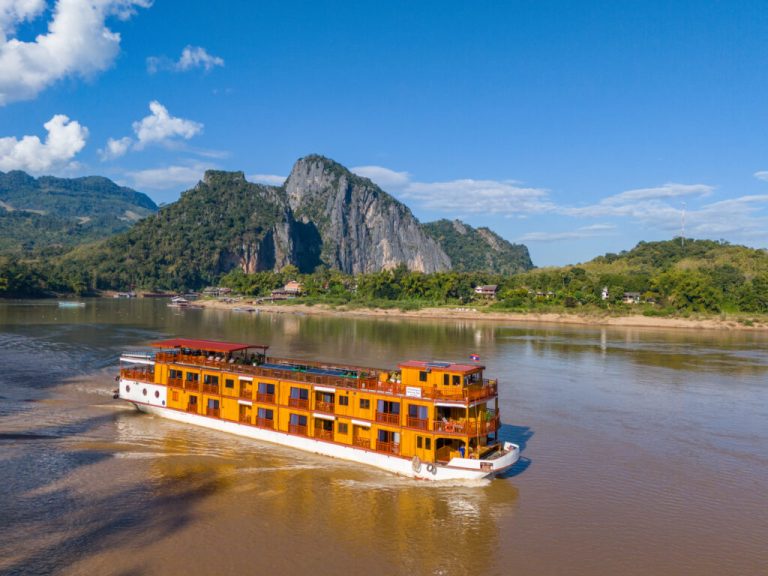
>>> See more: If you’re planning to explore Indochina – especially the captivating country of Laos – check out Focus Asia Travel’s DESTINATION PAKBENG TOUR 5D4N (50% River cruise + 50% overland visiting villages)
1.9. Buddhist Ordination

Buddhist monks in Laos (Photo: Collected)
Entering monastic life is an important milestone for Lao adolescents and young people. Buddhist ordination is a widespread tradition, although certain minimum requirements apply.
First, those wishing to enter the monkhood must be of an appropriate age, live an honest and respectable life, have a family and relatives in a particular village or community, maintain good conduct and a healthy lifestyle, and not be addicted to alcohol, gambling, or opium. They must also be physically fit.
Once these conditions have been met, the family and the person entering monastic life perform the Koong Buot ceremony, marking entry into the monkhood, followed by the Pa Khen Nak ceremony, known as the dragon offering ceremony. After completing the period of monastic practice, if the family wishes for their son to return to lay life, a simple ceremony called Koong Sik is performed.
1.10. Wedding Customs

Wedding customs in Laos are diverse and clearly reflect the spiritual life of the Lao people, while preserving many ancient traditions of different ethnic groups. Traditionally, Lao weddings generally follow a sequence similar to that found in Vietnam, beginning with the formal marriage proposal, followed by the wedding ceremony and a visit to the bride’s family home.
One distinctive feature is that during the wedding ceremony, the head of the groom’s clan gives blessings, sprinkles water, and ties white threads around the wrists of both the bride and groom. After the wedding, the groom traditionally lives with his wife’s family and works together with them.
Lao weddings also include the custom of kan xou, or allowing a couple to defer wedding expenses. Poor couples may marry first and, after becoming financially better off, hold a wedding ceremony according to the traditions of their village and community.
1.11. Funeral Customs

The Royal Funeral of King Sisavangvong. October 29, 1959. (Photo: ASEAN Culture and Architecture)
When someone dies in a family, relatives may feel deep sorrow, but they traditionally refrain from expressing their grief through intense wailing and instead try to endure their emotions.
When a deceased person is a grandparent or parent, their children and grandchildren use young coconut water to wash the deceased’s face and use paper impressions of the hands and feet as objects of remembrance and worship.
The body is sprinkled with scented water, and relatives place a polished coin in the mouth and tie white threads around the neck, both wrists, and both ankles. Whether the deceased is cremated or buried, the body is placed in a coffin.
To choose a burial or cremation location in the cemetery, Lao people traditionally throw a handful of sticky rice or an egg. The place where the egg or sticky rice lands is chosen as the location for burial or cremation.
If the deceased is cremated, three days later the family invites relatives and Buddhist monks to collect the bones. The remains are placed in a ceramic urn and taken to a stupa at a temple for convenient worship and remembrance.
>>> See more: Experiencing The Rock Viewpoint – A Limestone Mountain Plateau in Laos
1.12. Music, Singing, and Dance
Lao folk music includes many forms, such as lam, khap, xong, kap, and an nang sue.
Lam
Lam has many forms, which can generally be divided into two main groups: lam san and lam yao.
Lam san consists of short songs expressing people’s thoughts and emotions. The lyrics are often rich in rhyme and rhythm and may be improvised according to the situation. Lam yao, on the other hand, consists of long narrative songs. Lam san includes the following forms:
- Lam Loong features long, sustained melodies with high and low tones, well suited to describing vast rivers, water landscapes, skies, and riverside villages.
- Lam Vai, found in central Laos, has an energetic and lively rhythm that accompanies dances inspired by movements associated with everyday work.
- Lam Tai, found in southern Laos and also known as Lam Si Phan Don, has a gentle and graceful melody. Its lyrics are rich in imagery and metaphors and are often used to express affection and love.
- Lam Tat is often performed with the khene as accompaniment and combined with dancing. Its rhythm is gentle, with varying high and low tones. The performance begins with a long, sustained “oh” sound followed by cheers and vocal responses.
- Lam Toei is one of the most popular forms of lam in Laos. It has a lively and rapid rhythm and is performed by a man and a woman who sing and dance to the accompaniment of the khene. The accompanying dance, known as phon kiew or phon, is graceful and expressive. Lam Toei also has regional variations, such as Toei Pha Ma in northern Lao communities and Toei Mahaxay in Khammouane Province in central Laos.
Other Forms of Singing, Music, and Dance
- Khap is a popular form of folk singing in the northern provinces of Laos. It consists of short songs similar to the Vietnamese folk singing style known as hò.
- Xong is a simple form of folk singing often accompanied by dancing. Types of xong include Xong Bang Fai, performed during the Rocket Festival, and Xong Souang Heua, performed during boat racing festivals.
- An Nang Sue involves expressive reading or recitation based on the content of a poem or story.
- I-Ke Lakorn is an ancient musical theater form that celebrates love for one’s homeland and country as well as romantic love between men and women.
- Loong Pheng, meaning singing, includes modern songs as well as songs adapted from I-Ke Lakorn.
- Dance is the most widespread form of folk performance. Some of the earliest Lao dances include Bang Fai, Lam Phen, Si Nuon, Ko That, and Dok Bua, meaning lotus flower dance.
- Traditional musical instruments include the Khene, a bamboo mouth organ, Koong, a drum, and Koong Tung, a barrel-shaped drum.
1.13. Traditional Festivals in Laos
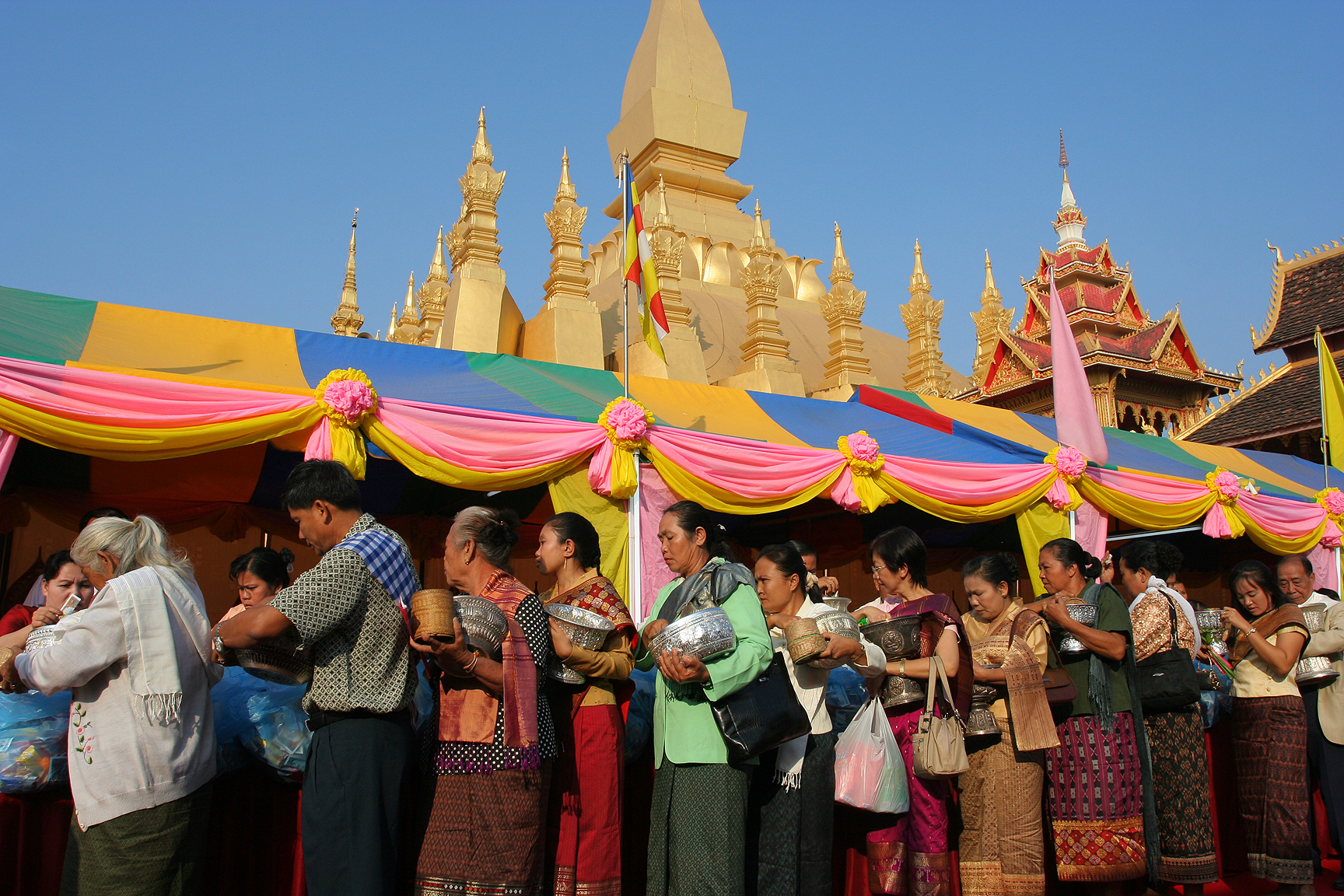
Boun That Luang or That Luang Festival (Photo: Collected)
- Bun Sang Kha Chao Khao Kham, a festival honoring spirits and supernatural beings, is held on the 7th day of the first lunar month.
- Bun Khun Khao, the Rice Spirit Festival, is held on the 1st day of the second lunar month.
- Bun Makha Bu Sa, commemorating the day of the Buddha’s enlightenment, is held on the 15th day of the third lunar month.
- Bun Pha Wet, the Vessantara Buddha Festival, is held on April 30.
- Bun Pi Mai, Lao New Year, is celebrated from April 13 to 15.
- Bun Visakha Bu Sa, celebrating the Buddha, is held on the 15th day of the sixth lunar month.
- Bun Sam Ha, a purification and blessing festival, is held in the seventh lunar month.
- Bun Khao Phansa, marking the beginning of Buddhist Lent, is held on the 15th day of the eighth lunar month.
- Bun Khao Padap Din, a festival honoring the dead, is held on the 15th day of the ninth lunar month.
- Bun Ho Khao Sak, a festival for making offerings to restless spirits, is held on the 15th day of the tenth lunar month.
- Bun Ok Phansa, marking the end of Buddhist Lent, is held on the 15th day of the tenth lunar month.
- Bun Kathin, the festival of offering robes and other gifts to Buddhist monks, is held on the 15th day of the twelfth lunar month.
- Bun That Luang, the That Luang Festival, is held in mid-November in Vientiane, the capital of Laos. It is the country’s largest festival and carries great significance in promoting and strengthening Buddhism in Laos.
2. Experiences and Tips for Joining Festivals in Laos
When attending festivals in Laos, visitors should keep a few useful tips in mind to fully enjoy the festive atmosphere and gain a deeper understanding of local culture.
2.1. When Is the Best Time to Visit Laos?
The festival season in Laos commonly takes place in April, May, October, and November. During these months, many major festivals are held, giving visitors opportunities to experience distinctive cultural activities and interact with local communities.
If you want to participate in major celebrations such as Bun Pi Mai or Boun Souang Heua, consider planning your trip during these months. You will not only enjoy lively festivities but also have opportunities to interact with local people and learn more about their customs and traditions.
2.2. Dress Appropriately
When attending religious festivals in Laos, visitors should pay attention to their clothing. People generally dress modestly and respectfully to show consideration for religious ceremonies and activities.
For women, traditional long skirts or modest, long clothing are appropriate choices. Men generally wear collared shirts and long trousers. Choosing suitable clothing not only helps you feel comfortable but also allows you to blend more easily into the festival atmosphere and show respect for local customs.
2.3. Immerse Yourself in Local Culture
To have a truly memorable festival experience, you should immerse yourself in the local culture. You can participate in traditional activities such as the Baci ceremony, where white cotton threads are tied around the wrist as a blessing for good luck, or take photos with local people wearing traditional clothing.
Taking part in cultural activities not only helps you gain a deeper understanding of Lao culture but also creates memorable experiences during your journey through the Land of a Million Elephants. You can also consider joining organized tours to receive guidance and learn more about the meaning and practices associated with these traditional activities.
Laos is not only a destination for those who appreciate peace and tranquility but also a place where you can immerse yourself in a distinctive culture filled with colorful traditional festivals. If you are looking for a memorable journey through Laos, let Focus Asia Travel accompany you! We offer complete Laos tour packages with attractive itineraries, helping you discover the beauty and cultural richness of the Land of a Million Elephants. Don’t forget to follow Focus Asia Travel for useful travel information and the latest travel news!
>>> See more articles:
UNIQUE AND DISTINCTIVE FEATURES OF LAO CULTURE – THE LAND OF A MILLION ELEPHANTS (PART 1)
Wat Ong Teu in Vientiane, Laos
Kuang Si Butterfly Park – An Attractive Check-in Spot in Luang Prabang, Laos