



UNIQUE AND DISTINCTIVE FEATURES OF LAO CULTURE – THE LAND OF A MILLION ELEPHANTS (PART 1)

Lao culture is a colorful tapestry where traditional values and national identity blend together, creating a rich and distinctive cultural heritage. When traveling to Laos, visitors have the opportunity not only to admire spectacular natural landscapes and ancient architecture but also to experience the country’s rich culture through its unique festivals, customs, and traditions.
1. Distinctive Features of Lao Culture
Lao culture has been shaped by many different factors, including religion, lifestyle, and cuisine. These distinctive elements not only reflect the customs and traditions of the Lao people but also demonstrate their deep connection with nature.
1.1. The Influence of Buddhism

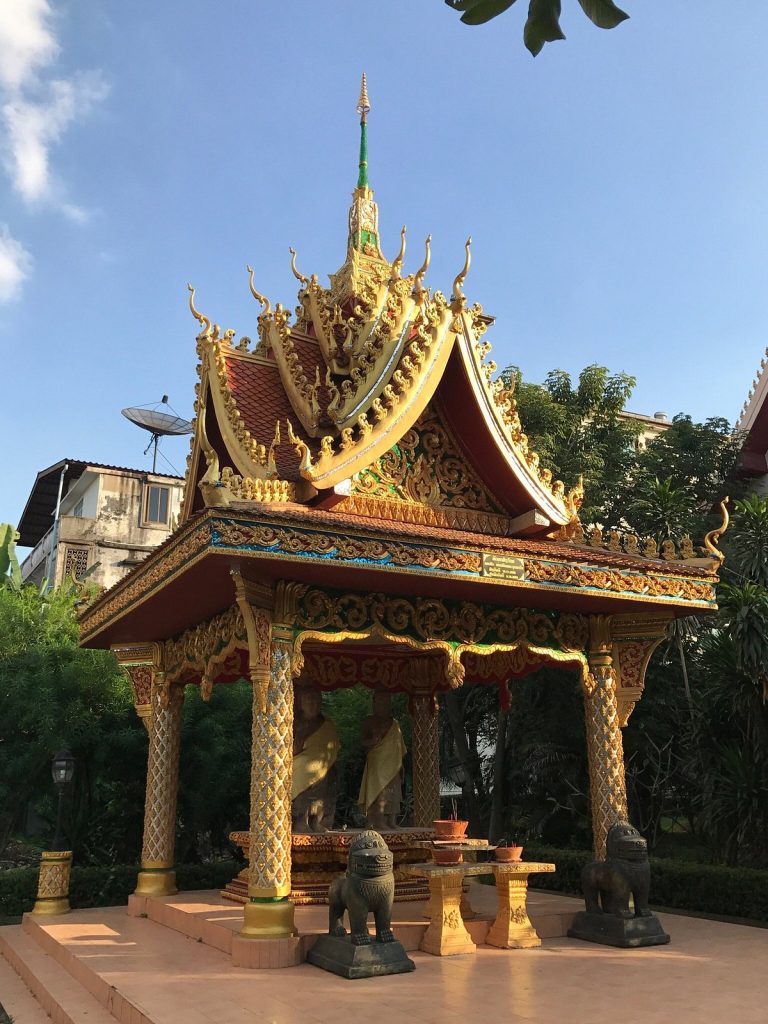
The influence of Buddhism on Laos (Photo: Collected)
Buddhism plays a central role in Lao culture, influencing many aspects of people’s spiritual and social lives. With around 60% of the population practicing Buddhism, religious rituals, festivals, and community activities are strongly influenced by Buddhist traditions.
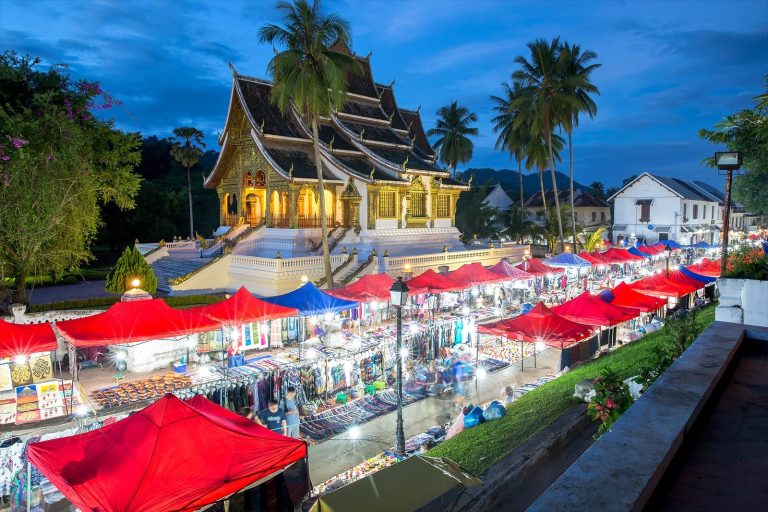
The Lao people have great respect for Buddhist rituals, which is clearly reflected in major celebrations such as Lao New Year (Bun Pi Mai) and the That Luang Festival. Temples are often beautifully decorated and have become important cultural and spiritual symbols of the country.
Images of the Buddha, together with the peaceful surroundings of the temples, create a sacred and tranquil atmosphere that attracts not only devotees but also visitors from around the world.
>>> See more: If you’re planning to explore Indochina – especially the captivating country of Laos – check out Focus Asia Travel’s LAOS DISCOVERY TOUR 5D4N!
1.2. Greeting with the “Nop”
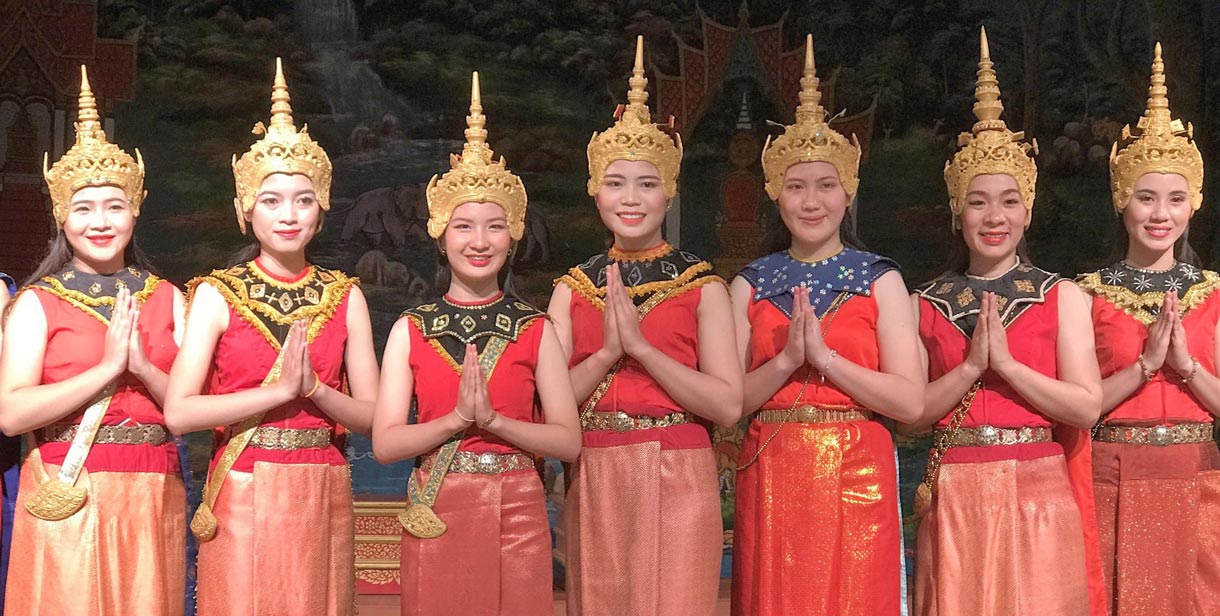
Greeting with the “Nop” (Photo: Collected)
Another distinctive feature of Lao culture is the traditional “Nop” greeting. Instead of shaking hands as in many other countries, Lao people place their palms together in front of their chest and bow slightly when greeting one another. This gesture expresses mutual respect and is also a symbol of Lao hospitality.
The Nop is more than simply a social greeting; it carries a deeper meaning related to the Lao people’s philosophy of life and spirituality. Through this traditional gesture, people show respect for others, whether they are acquaintances or strangers.
1.3. Traditional Cuisine
The main staple crops in Laos are sticky rice and ordinary rice. A typical meal often includes grilled food such as fish and meat, as well as salads and bitter, sour, and astringent fruits such as green bananas and tamarind. The Lao people enjoy a variety of foods, including fish, snails, frogs, shrimp, small prawns, and different types of wild game.
However, buffalo and beef are among the most highly valued meats. Chili is an indispensable seasoning in Lao cuisine. Padaek, a traditional fermented fish sauce, is commonly used to season dishes. Laap is traditionally served at festive meals and when welcoming guests.

Laap Lao (Lao Minced Pork Salad) (Photo: Collected)
During a meal, regardless of how much food is served, guests are expected to try a little of each dish to please the host. However, they should also leave a small amount of rice or sticky rice on their plate as a symbol of abundance and having enough food.
Cuisine is an important part of Lao culture, characterized by simplicity combined with a diverse range of flavors. Traditional dishes such as Laap (minced meat salad), Tam Mak Hoong (spicy green papaya salad), and Lao sticky rice are commonly enjoyed in everyday meals as well as during festivals and special occasions.
Laap is an essential dish at many Lao celebrations and gatherings. It is typically made with minced meat mixed with fresh herbs and distinctive seasonings, creating a fresh and flavorful dish. Tam Mak Hoong, or spicy green papaya salad, is also extremely popular and is often served as an appetizer or side dish.
Lao sticky rice is usually eaten alongside other dishes. More than just a staple food, it also carries cultural significance, symbolizing family unity and togetherness when loved ones gather around the dining table.
1.4. Traditional Houses
Traditional Lao homes are typically wooden stilt houses. Building a stilt house usually requires the collective efforts of the village and community and must follow established procedures and rituals. Lao stilt houses traditionally face north, with their backs toward the south.
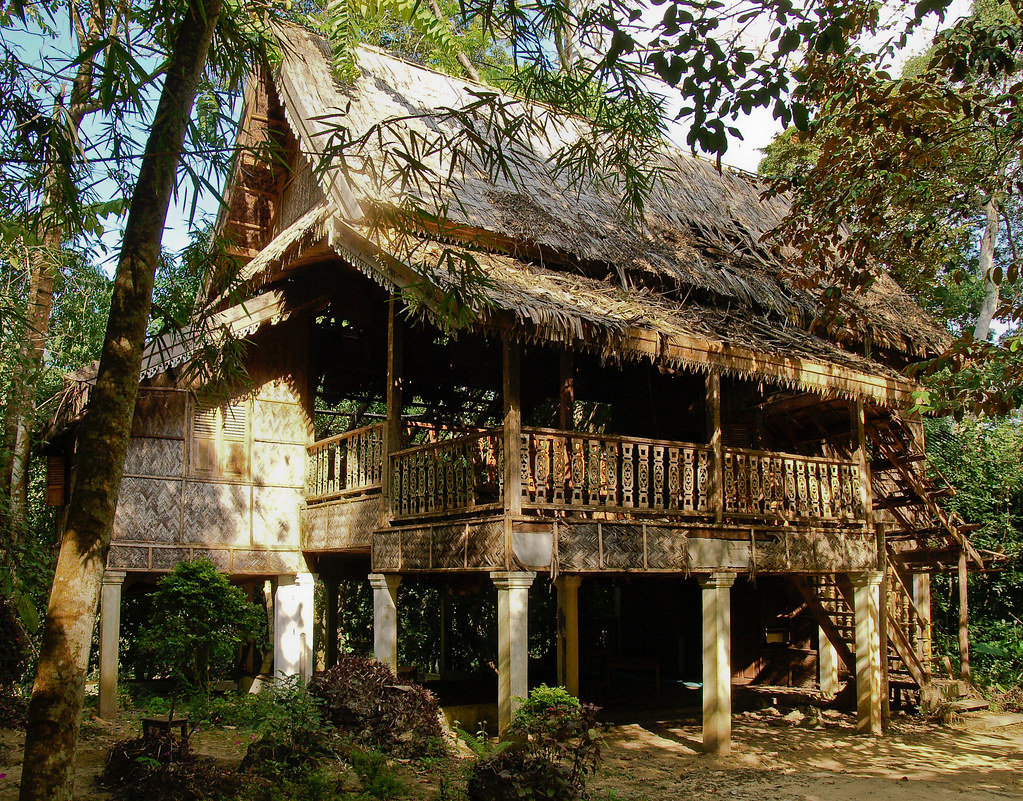
Traditional style House near Luang Prabang, Laos (Photo: Collected)
A house usually consists of three sections supported by eight pillars. When digging the foundations and setting the pillars, the southern pillar (Sao Hek) is installed first, followed by the eastern pillar (Sao Khwan).
The house is generally divided into two main areas. The outer area is used for eating and cooking, while the inner area consists of separate rooms used for worship and resting.
>>> See more: Top 10 most interesting Laos festivals
1.5. Clothing and Jewelry
For generations, the Lao people have been self-sufficient in producing fabrics and blankets. Before manufactured dyes became available, they used various forest fruits and roots to dye textiles. Lao girls traditionally favor floral and checked fabrics in deep, vivid colors inspired by the mountains, forests, and flowers.
Lao young men traditionally wear short hair, short-sleeved round-neck shirts, and shorts, with a colorful or checked pha sarong wrapped around the outside.

Traditional costumes for men of Laos (Photo: Collected)
On important festival days, they wear traditional clothing consisting of a round-neck shirt with fabric-covered buttons fastened on the left side, a brightly colored pha nyao nep tiao wrapped around the waist, and a pha bieng, a traditional cloth draped diagonally across the chest.
In everyday life, Lao people commonly use a type of cloth called pha phe. This is a modestly colored checked fabric that can be used as a bathing towel, head covering, scarf, or as a cloth for wrapping clothes and tying them around the waist.
For Lao women, girls may leave their hair long or cut it short when they are young. After the age of 10, however, they traditionally wear their hair in a bun. Unmarried women wear the bun to one side, while married women wear it straight at the back. Women over the age of 50 commonly cut their hair short.

Traditional costumes for Lao women (Photo: Collected)
According to traditional customs, Lao women usually wear skirts with a waistband and hem, neither too short nor too long.
The skirts often feature embroidered borders depicting flowers, leaves, and birds, while shirts may be decorated with brass or silver buttons. A silver belt called a kham khat, together with earrings, necklaces, rings, and bracelets, traditionally forms part of the jewelry that girls receive from their parents from an early age.
1.6. Division of Labor
Within the family, men traditionally undertake heavy tasks such as plowing, clearing fields, constructing irrigation channels and dams, hunting, and repairing houses. Boys usually perform lighter tasks such as herding buffalo and cattle, looking after farmland, and learning adult skills from their fathers, including fishing and setting traps.
Lighter household and agricultural tasks, such as harvesting, tending gardens, raising livestock, gathering food, cooking, sewing, weaving, and caring for children, are traditionally undertaken by women.
>>> See more: Muang Khoun: remains of the old kingdom in Laos
1.7. Family, Kinship, and Neighborhood Relations
Villages and local communities generally consist of several clans, with each clan including many families. Families are connected through traditions, emotional bonds, and economic relationships.
In terms of kinship, the Lao people recognize relationships through the father’s family, the mother’s family, the husband’s family, and the wife’s family. Matrilocal residence, in which a newly married husband lives with his wife’s family, is a common tradition in rural Laos. The husband is expected to stay with his wife’s family for a certain period.
When the couple eventually establishes their own household, the parents may give them a portion of the family’s property.
The Lao people cherish their children and traditionally treat daughters and sons equally. Like boys, girls are free to attend festivals and are entitled to a share of their parents’ property. Monogamy is common among Lao families.

Brao family outside their home in Laos (Photo: Collected)
The tradition of forming sworn brotherhoods and friendships, together with values of honesty, sincerity, and loyalty, has existed for a long time and continues to be maintained.
Beyond relatives and extended family, each member of the village also maintains close relationships with the wider community. Solidarity, mutual assistance, and hospitality are highly valued Lao traditions. When guests arrive at a home, the host offers blessings for good fortune and welcomes them warmly and respectfully.
However, guests are also expected to behave appropriately according to local customs so as not to offend their hosts. In particular, Lao people consider touching someone’s head taboo, and people should avoid passing underneath houses or clotheslines.
Therefore, guests should not touch another person’s head or pat children on the head. When walking, they should avoid touching or stepping over another person’s feet.
When passing in front of an elderly person, they should apologize and lower their body slightly. When greeting someone, they should place their palms together in front of their chest and bow their head slightly.
(To be continue)
Join Focus Asia Travel in checking out part 2 of this article below!
>>> See more articles:
Wat Ong Teu in Vientiane, Laos
Kuang Si Butterfly Park – An Attractive Check-in Spot in Luang Prabang, Laos