





Laos Cuisine: Sticky Rice and Noodle Soups

Laos cuisine blends fresh herbs, aromatic spices, sticky rice, noodles, and local ingredients, reflecting the country’s rich cultural heritage. From Khao Niao and flavorful noodle soups to Laap and Nam Kao, Lao food offers a unique mix of spicy, sour, fresh, and bitter flavors. Exploring Lao cuisine is a delicious way to discover the country’s traditions and local lifestyle.
1. A Culinary Journey Through Southeast Asia
We already presented you with some introductions to the delicacies of Vietnamese cuisine as well as the tasty varieties of Thai street food and curries. We absolutely loved the different styles and sorts of dishes prepared here and had a great time exploring the food markets around these countries. Moving further on our trip around Southeast Asia we eventually had the chance to visit the beautiful country of Laos, a true hidden gem landlocked between the countries of China, Vietnam, Cambodia, Thailand and Myanmar. In terms of its cuisine, Laos has a mix of distinct local dishes and ingredients along with tastes influenced by its neighbors.

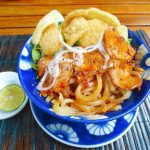
Khao Poon Nam Sin Soup (Noodle Soup) (Photo: Collected)
>>> See more: If you’re planning to explore Indochina – especially the captivating country of Laos – check out Focus Asia Travel’s LAOS DISCOVERY TOUR 5D4N!
2. Sticky Rice – The Heart of Every Lao Meal
The foundation of all Lao meals and staple food of the country is sticky rice, locally referred to as Khao Niao. It is mostly eaten by hand and is basically served along with most of the dishes found in Laos. You will find it served in a small woven basket. Variations of sticky rice include brown rice or specially cooked rice inside a bamboo tube. On average, Laotians eat more sticky rice per person that anywhere else in the world.

Chicken curry with sticky rice in a traditional basket (Photo: Collected)

Visually appealing dishes made from vegetables, rice, and noodles at the Lao night market. (Photo: Collected)
>>> See more: 10 Must-Try Traditional Dishes You Can’t Miss in Laos
3. Essential Ingredients and Distinctive Flavors
Essential ingredients are garlic, chilies (both fresh and dried), lime, scallion, ginger, tamarind, lemongrass, galangal and fresh herbs such as dill, lime leaves, kaffir and cilantro. Fish, beef and water buffalo are the most common meats you will encounter. Fish sauce made from slowly fermented fish paste is another vital component of Lao cooking.
Laotian food at times overlaps with dishes served in its neighboring countries, some even bear traces of the country’s French colonial influence, such as the adopted baguette meals. Despite this, Lao food remains distinct and different. Lao cooking focuses on the interplay of fresh herbs and mildly spicy undertones, at times even with bitter components.

Roast chicken at the Lao night market. (Photo: Collected)
Famous Laotian dishes are Laap (meat salad), a variety of different noodle soups, Nam Kao (rice salad) and Sai Oua (traditional Lao sausage). Make sure to wash down those tasty dishes with some amazingly delicious and award-winning Lao Beer, also known as Beerlao.
4. TIPS
Walk through the night market of Luang Prabang to a small side alley known as the ‘food street’. Here you will find a huge variety of vegetarian rice and noodle dishes which you can load onto your plate as much as you can. It’s very tasty and a real budget option – you can also add some meat or fish to your meal for a small extra charge. Definitely a great option when visiting Luang Prabang!
>>> See more articles:
Laos Travel – Hidden Beauty and Captivating Destinations Every Traveler Should Explor
Discover Pakse – Laos’ Relaxing Riverside Gateway
Luang Prabang Travel Guide: Everything You Need to Know (Part 1)