





Muang Khoun: remains of the old kingdom in Laos

Located 30 km southeast of Phonsavan. Muang Khoun was once the Royal Capital and the centre of the Phuan Kingdom. Some might describe it as a shadow of its former self and they would be quite accurate in doing so. A few French colonial buildings still remain in the town centre alongside Watt Is Phum- home to a sitting Buddha.
1. Introduction
Muang Khoun, known also according to its old name as Xieng Khuoang, was once the royal seat of the small kingdom of Xieng Khuoang. It was a large and beautiful city protected by wide moats and forts occupying the surrounding hills. There were sixty-two pagodas and their stupas, of which the flanks apparently kept treasures.

Muang Khoun as seen from above (Photo: Collected)
As a result of long years of invasions by Thai and Vietnamese soldiers, pillaging by Chinese bandits in the nineteenth century and a rain of bombs during the 2nd Indochina War, nearly nothing was left of the kingdom’s exquisite temples. Today, the remains that remind us of the kingdom’s former glory are Pha That Foon, That Chomphet, Wat Phiavat and Wat Si Phom.
>>> See more: If you’re planning to explore Indochina – especially the captivating country of Laos – check out Focus Asia Travel’s LAOS DISCOVERY TOUR 5D4N!
2. When to go?
The best time to visit Laos is between November and April, as it’s the dry season. However, try to avoid February and March if possible. It doesn’t rain but it’s the time when the burning season starts and dense haze hangs over the mountains and the air quality is regularly rated as unhealthy.
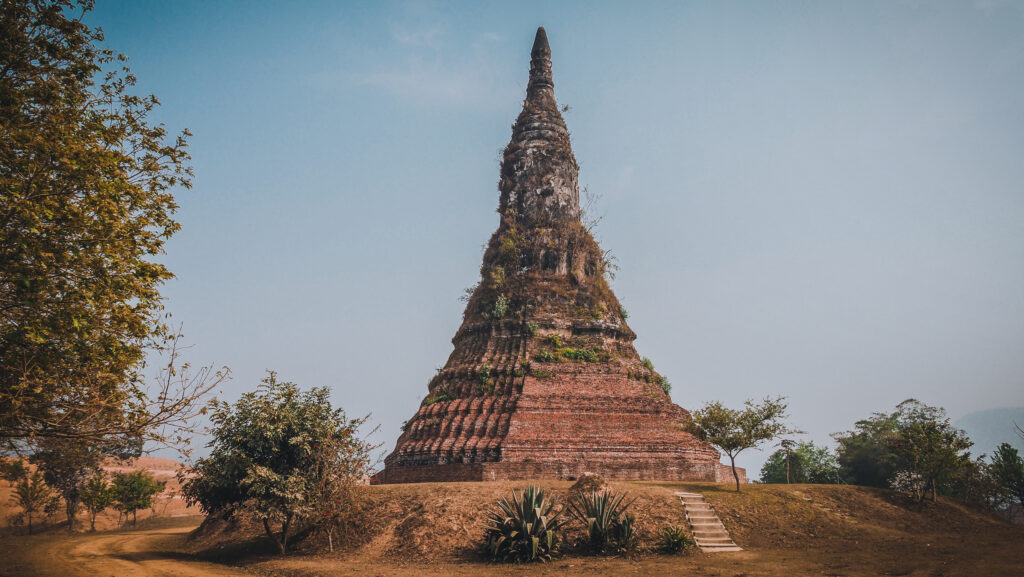
Renovated Pha That Foon (Photo: Collected)
3. How to get to Muang Khoun?
Muang Khoun is about 30 km away from Phonsavan. Route 1D which runs eventually to Paksan is paved and comfortable to travel.
You can rent a motorbike from most of the guesthouses and travel agents in Phonsavan and travel there independently or sign up for a tour, which takes you to a few sites in the Plain of Jars as well as Muang Khoun.
>>> See more: Vang Vieng – A Peaceful and Dreamy Town in Laos
4. Where to stay?
Most people stay in Phonsavan and visit Muang Khoun for a few hours, but if you have to, you may check out Neejli Guesthouse or Mrs Tout Guesthouse.
5. How long to stay?
Half a day is enough to check out the temples and have a relaxing meal or drink around the nearby market.
6. Interesting sights in Muan Khoun
6.1. Pha That Foon
That in Lao means “stupa” and “chedi”, a Buddhist monument. Often, the structure houses cremation remains. Its size depends on the status and wealth of the deceased. Monuments considered the most sacred, contain relics of the Buddha. During the construction of a that, religious items such as manuscripts, Buddha images, and other items of value are stored in the interior. A sculpture of a tree composed of jewels serves as its central pillar.
That Foon was built in 1576 and was erected to house the ashes of Lord Buddha that were brought from India and other treasures. Unfortunately, Chinese invaders plundered it. It was rebuilt after the 2nd Indochina War and now again looks pretty decent.
6.2. That Chomphet
Further along, the ridge is less elegant That Chomphet, built around the same period as That Foon. It was almost completely destroyed in 1966 during the war. However, it’s a nice viewpoint of the town and surrounding mountains.
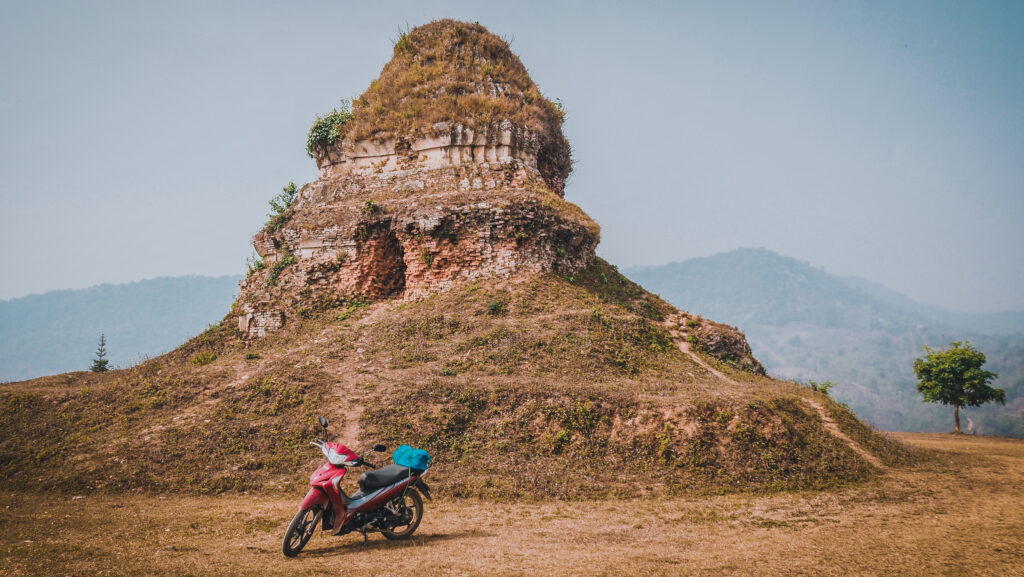
That Chomphet (and tourist ‘s motorbike) (Photo: Collected)
6.3. Wat Phiavat
The large Buddha image and remnants of pillars are traces of Wat Phaviat’s grandeur. The temple was built in the 14th century. In one tale, the same artisan who built Wat Si Phom located a few blocks away, constructed Wat Phaviat.
In the 19th century, local bandits and invading armies damaged the temple searching for riches. Fightings in the 1st Indochina War destroyed the temple and its large Buddha image in 1953. The community rebuilt both a year later. The intense bombing of the 2nd Indochina War destroyed most of the structure, leaving the Buddha image, some pillars and part of the wall seen today.
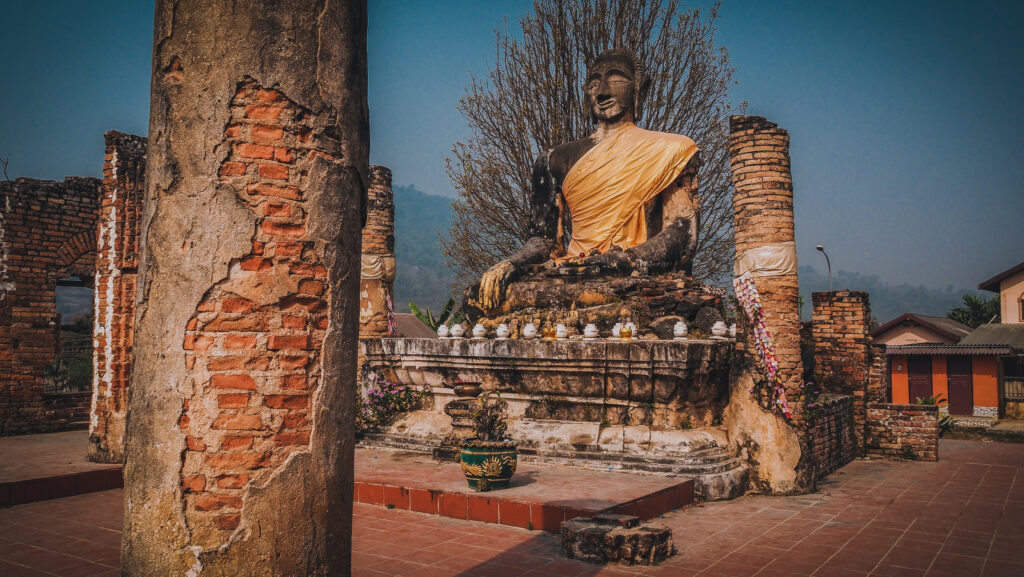
Buddha statue in Wat Phiavat (Photo: Collected)
6.4. Wat Si Phom
The temple was founded in 1390 shortly after Muang Phuan became a vassal of the powerful Lao Lan Xang Kingdom. Its architecture is modelled on the Lan Xang style. Invasions and wars ravaged Xieng Khouang, including Wat Si Phom. The townspeople rebuilt the religious hall after the end of the 2nd Indochina War.
>>> See more: Tham Poukham Cave: Discover the Pristine Beauty of Laos
6.5. Plain of Jars – site 16
Remote and hardly visited site of the famous Plain of Jars. It’s about 15 minutes drive from the town so you may check it out if traveling on a motorbike. Take a turn-off at Na Lin village.
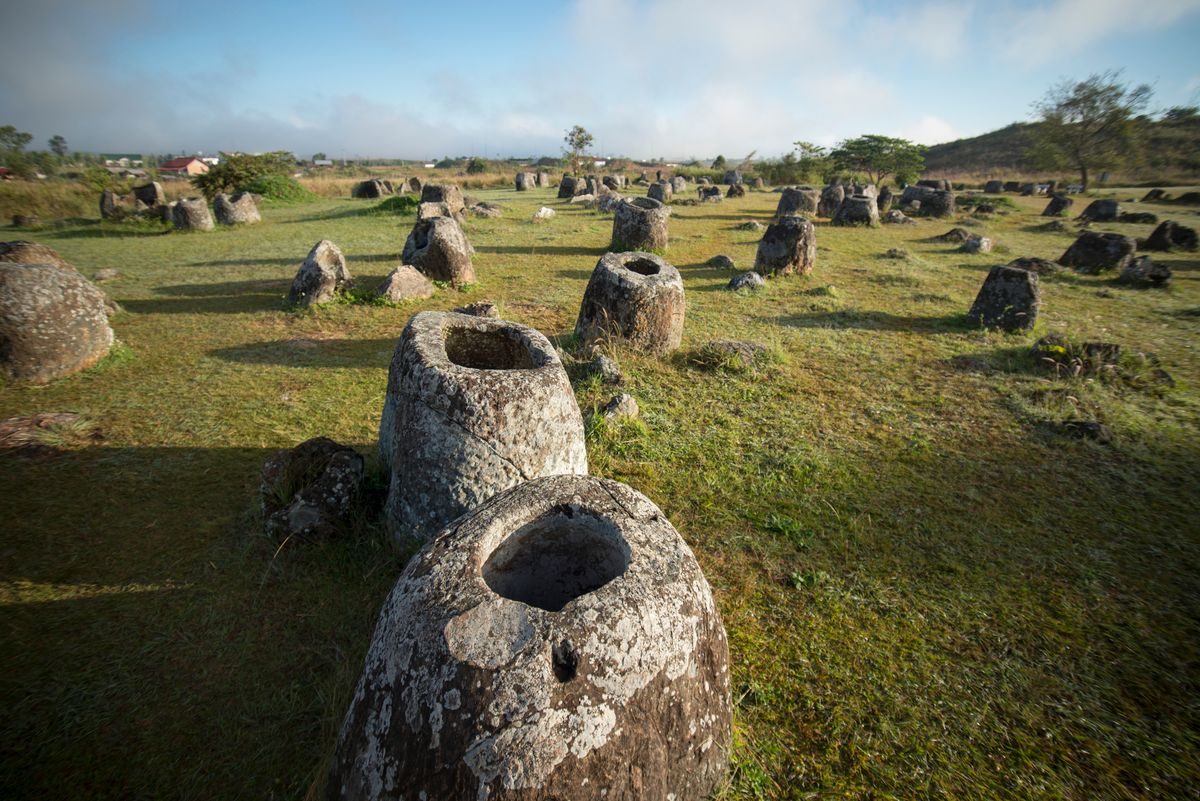
Plain of Jars (Photo: Collected)
7. Summary
Muang Khoun has some interesting temples to visit in about 2-3 hours. I definitely wouldn’t travel a long distance to get there, but if you are visiting Phonsavan, it’s a pleasant ride out of town.
>>> See more articles:
Laos Travel – Hidden Beauty and Captivating Destinations Every Traveler Should Explor
Or Lam – The Soul-Warming Traditional Stew of Luang Prabang, Laos
The Bustling Colors Of Savannakhet Night Market