





That Ing Hang Stupa – A Sacred Pilgrimage Site in Laos

Built in the mid-16th century, That Ing Hang Stupa in central Savannakhet is regarded as the second most sacred pilgrimage site in Laos, after Wat Phou in Champasak.
1. Introduction to That Ing Hang Stupa in Laos
That Ing Hang Stupa is located in Ban Thad Village, along Route 9 between Savannakhet and Seno, approximately 12 km from Savannakhet. Savannakhet itself is famous as the birthplace of former Lao leader Kaysone Phomvihane. The city was also an important French trading outpost during the colonial period, which explains the presence of several old French and Sino-French buildings in its commercial areas.
According to local legend, there was once an ancient Hang tree at the site where the stupa now stands. One day, an elderly monk mysteriously appeared and would sit with his back against the Hang tree every day to meditate. One day, the monk passed away while meditating and was believed to have ascended to heaven. At the place where the monk died, local people built a stupa to enshrine his relics. Since then, the site has been considered sacred by the local community. In Savannakhet, one of the most prominent architectural landmarks is That Ing Hang Stupa.

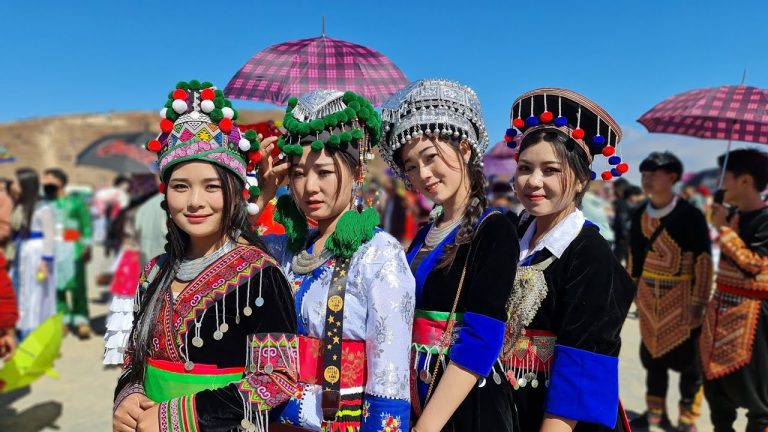
That Ing Hang Festival in Savannakhet Province (Photo: Collected)
That Ing Hang Stupa is not only an important sacred religious site for Lao Buddhists but is also highly revered by Buddhists living in northern Thailand. Visitors should dress modestly and respectfully when visiting the temple. Women are encouraged to wear traditional Lao clothing before entering the temple grounds. There are several shops outside the entrance where visitors can rent or purchase traditional Lao outfits. The temple is open daily from 8:00 AM to 6:00 PM.
>>> See more: If you’re planning to explore Indochina – especially the captivating country of Laos – check out Focus Asia Travel’s LAOS DISCOVERY TOUR 5D4N!
2. Best Time to Visit That Ing Hang Stupa in Laos
The ideal time to visit That Ing Hang Stupa is from November to February. During this period, the weather is warm and relatively dry. From March to May, temperatures and humidity levels increase, making the area hotter and more humid. If you plan to explore the site during this period, take precautions against heat exhaustion and sunstroke. The rainy season generally lasts from June to October, when the weather is cooler but humidity is high. Visitors can still explore the city during this period, but trips to more remote and wilderness areas are not recommended.
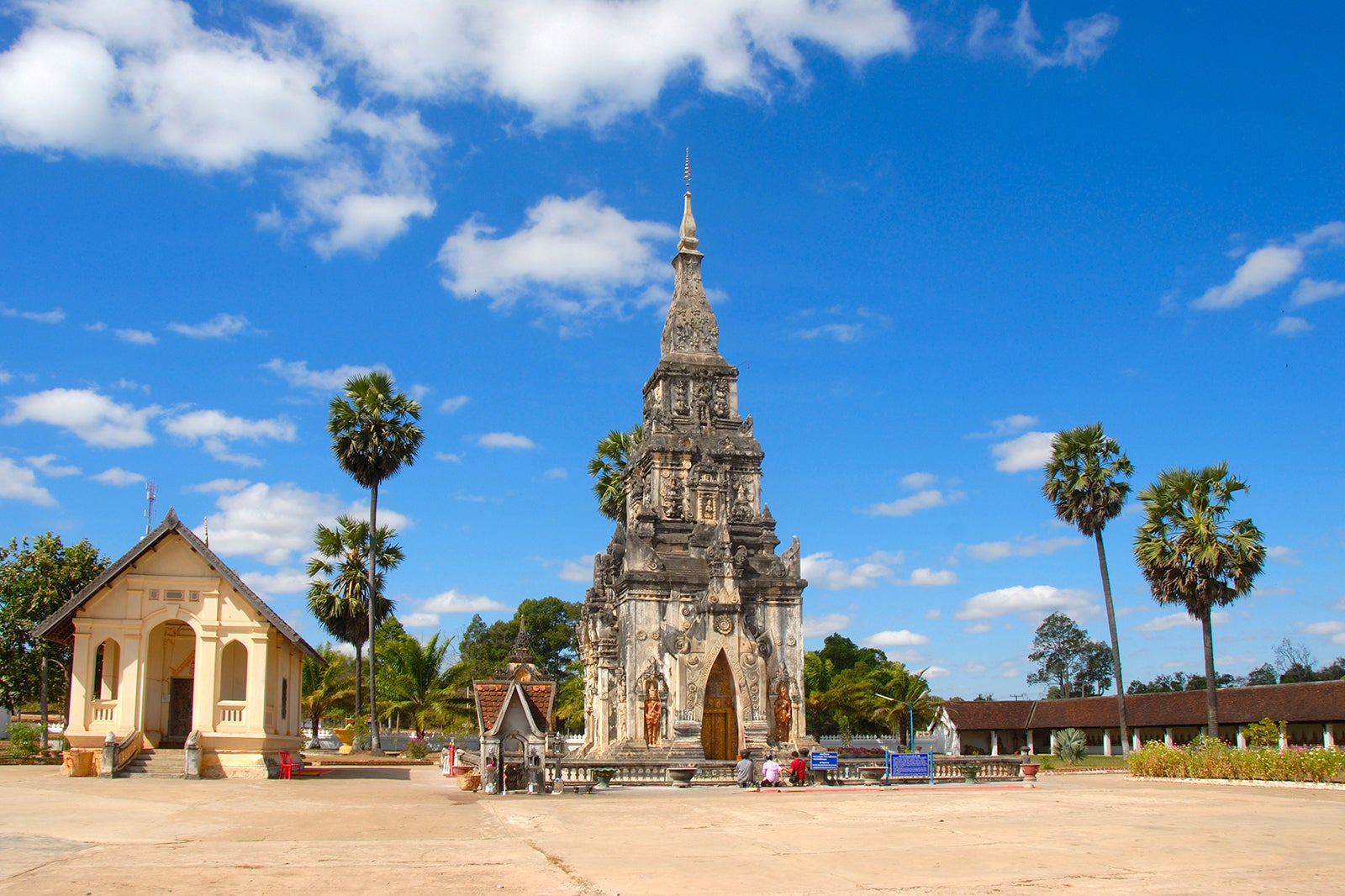
That Ing Hang Stupa, a Buddhist sacred site in Laos. (Photo: Collected)
>>> See more: Discover Pakse – Laos’ Relaxing Riverside Gateway
3. How to Get to That Ing Hang Stupa in Laos
Savannakhet Airport serves domestic flights from Pakse and Vientiane in Laos. There are also international flights from Thailand, Bangkok, and Da Nang in Vietnam. Buses traveling between Vientiane and Pakse pass through Savannakhet. The bus journey can be tiring because of the long travel time, averaging around 8 hours from Vientiane and about 5 hours from Pakse.

Savannakhet Airport (Photo: Collected)
From Savannakhet, you can reach That Ing Hang Stupa by tuk-tuk or by renting a motorbike and traveling approximately 15 km north of Kaysone Phomvihane District in Savannakhet Province. If traveling from Thailand, you can easily cross the 1.6-km-long Second Thai–Lao Friendship Bridge, which connects Mukdahan Province in Thailand with Savannakhet in Laos. The border crossing operates from 9:00 AM to 4:30 PM.
4. Architecture of That Ing Hang Stupa
That Ing Hang Stupa is located directly along Route 9 in Savannakhet. Viewed from above, the temple complex has a distinctive square layout, with brick walls surrounding all four sides. Inside the walls are corridors lined with numerous terracotta Buddha statues covered in a brilliant golden coating. The statues are carefully arranged in neat rows.
The relic stupa has a conical design and stands approximately 10 meters high in the center of the temple grounds. Surrounding it are sections of the walls and wooden doors. The doorways are decorated with reliefs and sandstone sculptures depicting the Buddha in meditation, snakes, flowers, plants, birds, and other living beings.
The prayer hall of That Ing Hang Stupa is where monks gather to chant Buddhist prayers. There is also a large bronze Buddha statue measuring approximately 40 meters high, although it is extremely heavy. According to local tradition, anyone who can lift the statue after making an offering is believed to have received the Buddha’s blessing and protection throughout their life.
>>> See more: Luang Prabang Travel Guide: Everything You Need to Know (Part 1)
5. Attractions Near That Ing Hang Stupa in Laos
5.1. That Phonh Stupa
That Phonh Stupa is a religious monument in Phonethat Village, approximately 45 km northeast of Savannakhet. It was constructed over a long period between 557 and 700 AD. Today, the site serves as a Hindu shrine dedicated to Shiva and other Hindu deities. An annual festival is held there on the full moon of the second lunar month.
5.2. Vat Sayaphum
Vat Sayaphum is located on the banks of the Mekong River in Ban Xayaphoum Village. The temple was built in 1542 and served as a school for novice monks and Buddhist monks. Be sure to visit the sanctuary to admire the well-preserved redwood and gilded wooden doors decorated with intricate carvings. You can also find a workshop within the temple grounds where local artisans handcraft Buddha sculptures.
Vat Sayaphum is also an important venue for major Buddhist festivals and ceremonies, including Lao New Year in April and the Boat Racing Festival in October.
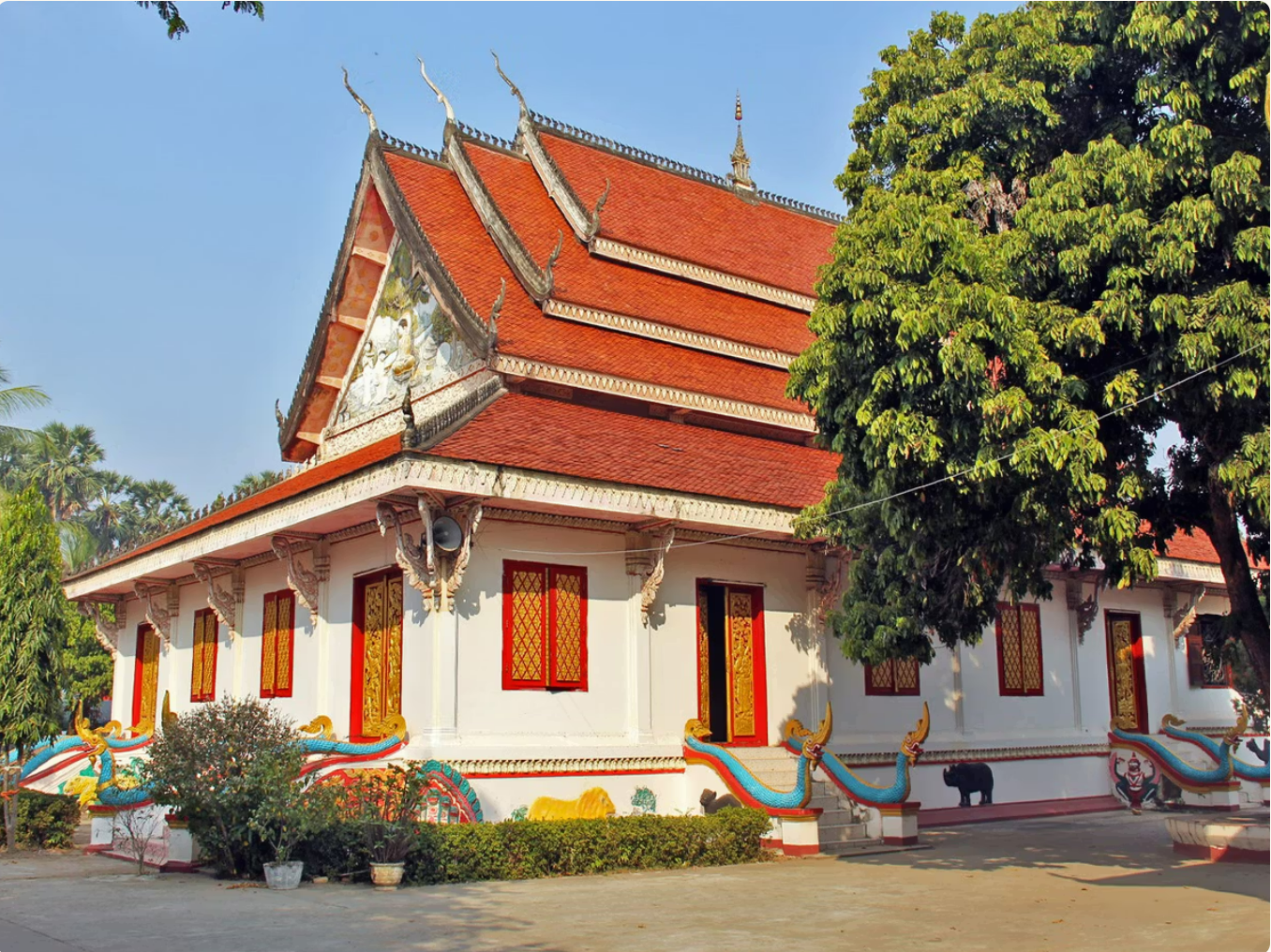
Vat Sayaphum (Photo: Collected)
5.3. Dong Phou Vieng National Protected Area
Exploring Dong Phou Vieng National Protected Area requires time for trekking through dense forests. The protected area is home to various resin-producing trees that release a flammable liquid when cut. Dong Phou Vieng is also inhabited by a variety of unusual wildlife, including hornbills, silvered langurs, and leaf monkeys.
Guided jungle treks in Dong Phou Vieng provide visitors with opportunities to learn about the traditional uses of natural resources, including edible leaves, herbs, and wild fruits. Trekking trips in Dong Phou Vieng usually last three to four days and include overnight stays in local villages.
>>> See more:Luang Prabang Travel Guide: Everything You Need to Know (Part 2)
5.4. Savannakhet Provincial Museum
If you are interested in history and want to learn more about the region’s past, Savannakhet Provincial Museum is an excellent place to visit. Most of the exhibits are related to wartime history. Visitors can also see battlefield relics, remnants of weapons, and examples of unexploded ordnance (UXO). Since the end of the war, unexploded bombs and landmines have continued to claim the lives of thousands of people in Laos.
5.5. Dinosaur Museum
The Dinosaur Museum is a fascinating attraction that may impress visitors with its collection of genuine dinosaur fossils excavated in Laos. Since the 1930s, fossils discovered around Savannakhet have been displayed here, including the remains of four dinosaur species, prehistoric mammal fossils, and meteorite fragments.

The Amazing and Spectacular Dinosaur Museum in Savannakhet (Photo: Collected)
The museum provides descriptions in Lao and French, while English-speaking staff are available to provide explanations and translations for international visitors.
5.6. Tribal Villages in Dong Natad Forest
Dong Natad is a nature reserve located approximately 15 km from Savannakhet city. The best way to experience this natural area is by hiking, and if you are lucky, you may spot some wildlife and rare plant species. There is also a beautiful lake along the hiking trail where visitors can photograph wild birds.
Two small tribal villages have lived in harmony with the forest for more than four centuries. Depending on the season of your visit, you may see villagers collecting mushrooms, wild fruits, honey, and even insects for food.
That Ing Hang Stupa attracts large numbers of visitors not only because of its spiritual significance but also because of its unique architecture. If you have the opportunity to travel to Laos, be sure to visit this remarkable pilgrimage site.
>>> See more articles:
Laos Travel – Hidden Beauty and Captivating Destinations Every Traveler Should Explor
Or Lam – The Soul-Warming Traditional Stew of Luang Prabang, Laos
Laos Cuisine: Sticky Rice and Noodle Soups