





Todaiji Temple – The “Great Eastern Temple” of Japan


Located in the historic city of Nara, Todaiji Temple is one of Japan’s most remarkable Buddhist landmarks. Known as the “Great Eastern Temple”, Todaiji is famous for its enormous wooden Great Buddha Hall, magnificent Buddhist statues, and its deep connection with the history and spiritual heritage of Japan.
Surrounded by the peaceful landscapes of Nara Park, the temple offers visitors a fascinating combination of history, architecture, religion, and nature. It is one of the highlights of any journey through Japan’s ancient capital.
>>>Check out tours featuring Todaiji Temple—Japan’s “Great Eastern Temple”—right now.
🏯 The History of Todaiji Temple

Todaiji was founded during the Nara period in the 8th century, when Nara served as the capital of Japan. Construction began under the reign of Emperor Shomu, who strongly supported Buddhism and wanted to establish a major religious center that would help protect and unite the country.
The temple was officially established in 752, when the Great Buddha was consecrated in a grand ceremony attended by monks and representatives from various parts of Asia.
For centuries, Todaiji played an important role in Japanese Buddhism and became one of the country’s most influential temples.
Although the temple has suffered destruction from fires and wars throughout its long history, it has been repeatedly rebuilt. The present Great Buddha Hall dates from the 17th century.
🗿 The Great Buddha – The Spiritual Heart of Todaiji

The most famous treasure of Todaiji is the enormous Vairocana Buddha, commonly known as the Great Buddha of Nara.
The statue is housed inside the Great Buddha Hall and represents Vairocana Buddha, a central figure in Japanese Buddhist tradition.
Standing before this enormous bronze Buddha is an impressive experience. Its enormous scale, peaceful expression, and the surrounding wooden architecture create an atmosphere that is both majestic and deeply serene.
For many visitors, seeing the Great Buddha is the highlight of their visit to Todaiji.
🏛️ The Great Buddha Hall – A Masterpiece of Wooden Architecture

The Daibutsuden, or Great Buddha Hall, is one of Todaiji’s most impressive architectural features.
The current structure was rebuilt in the Edo period after previous buildings were destroyed. Even though the present hall is smaller than the original, it remains an enormous wooden structure and is widely regarded as one of the world’s most remarkable historic wooden buildings.
Its enormous roof, traditional Japanese wooden construction, and symmetrical design demonstrate the extraordinary craftsmanship of ancient Japanese builders.
Walking toward the hall through the temple grounds allows visitors to appreciate its impressive scale from different perspectives.
🦌 Nara Deer – A Unique Experience Around Todaiji

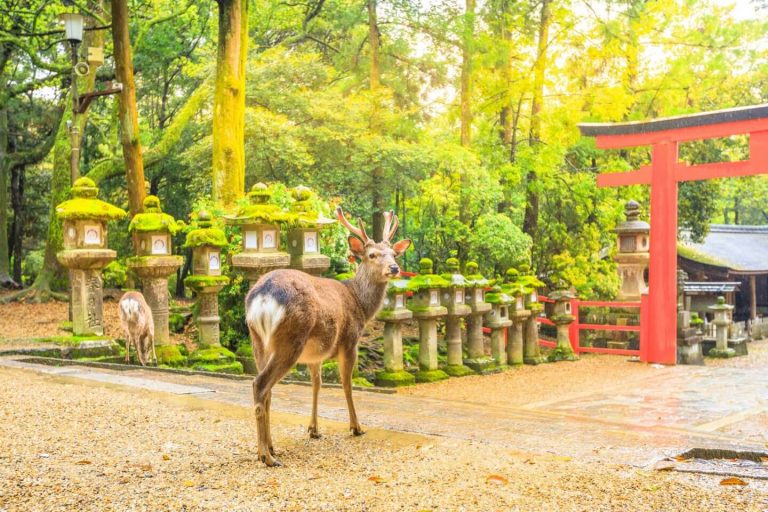
One of the most charming aspects of visiting Todaiji is the opportunity to encounter the famous Nara deer.
Hundreds of deer roam freely around Nara Park, including the area surrounding Todaiji. They have become an iconic part of the city’s identity and are traditionally regarded as sacred messengers of the gods.
Visitors can observe them wandering peacefully through the park, bowing for special deer crackers, or simply resting beneath the trees.
The combination of ancient temples and freely roaming deer creates a uniquely Japanese atmosphere that is difficult to experience anywhere else.
🚪 The Great South Gate – An Impressive Entrance

Before reaching the Great Buddha Hall, visitors pass through the magnificent Nandaimon, or Great South Gate.
The enormous wooden gate is protected by two powerful guardian statues known as Nio, which stand on either side of the entrance.
These fierce-looking figures were created to protect the temple from evil and symbolize the strength and protection of Buddhist teachings.
The gate itself is an outstanding example of traditional Japanese temple architecture and is one of the most impressive photo spots within the Todaiji complex.
🌳 Todaiji and the Beauty of Nara Park

Todaiji is surrounded by the beautiful landscape of Nara Park, making the journey to the temple as enjoyable as the temple itself.
The park changes character throughout the year. In spring, cherry blossoms add soft colors to the landscape, while autumn transforms the surroundings with brilliant shades of red, orange, and gold.
Walking through the park, visitors can enjoy the combination of ancient trees, traditional architecture, mountains, and Nara’s famous deer.
This peaceful environment makes Todaiji particularly enjoyable for travelers who want to escape the fast pace of modern cities.
📸 A Photographer’s Dream
Todaiji offers countless opportunities for beautiful travel photographs.
Some of the most memorable compositions include the Great Buddha Hall framed by trees, the Nandaimon Gate, traditional Buddhist statues, and deer wandering through the temple grounds.
The temple is especially atmospheric during early morning, when the surroundings are quieter and the soft natural light creates a peaceful mood.
For travelers visiting during autumn, the contrast between the temple’s dark wooden architecture and colorful foliage creates particularly spectacular photographs.
🕊️ A Place of Spiritual Peace

Beyond its historical and architectural significance, Todaiji remains an important Buddhist temple and a place of worship.
Inside the Great Buddha Hall, the atmosphere is noticeably different from the busy streets outside. The enormous Buddha statue, incense, wooden architecture, and quiet surroundings encourage visitors to slow down and appreciate the spiritual character of the site.
Even for travelers who are not Buddhist, visiting Todaiji can be a meaningful cultural experience and an opportunity to understand more about Japan’s religious traditions and history.
🌸 The Best Time to Visit Todaiji

Todaiji can be visited throughout the year, with every season offering a different experience.
Spring is popular for cherry blossoms, creating a romantic atmosphere around Nara Park. Summer brings lush greenery and vibrant landscapes, while autumn is particularly spectacular as the surrounding trees turn red, orange, and gold.
Winter offers a quieter atmosphere, with fewer crowds and a peaceful setting around the historic temple.
For photography and sightseeing, early morning is an excellent time to visit because the temple grounds tend to be calmer.
✨ Why Should You Visit Todaiji Temple?
Todaiji is much more than an ancient temple. It is a place where Japanese history, Buddhist culture, architecture, art, and nature come together.
From standing before the enormous Great Buddha and walking beneath the historic Nandaimon Gate to meeting the friendly deer of Nara Park, every moment offers something memorable.
For travelers following the Osaka – Nara – Kyoto – Mount Fuji – Tokyo route, Todaiji is an especially valuable stop because it introduces a completely different side of Japan—the Japan of ancient capitals, Buddhist traditions, sacred temples, and timeless cultural heritage.
🇯🇵 Todaiji Temple – Where Japan’s ancient history comes alive.
A visit here is not simply about seeing a famous temple; it is about stepping into a chapter of Japanese history and experiencing the timeless beauty of Nara.