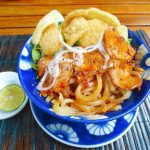






Khao Poon: A Flavorful Traditional Lao Noodle Soup

When exploring Lao cuisine, travelers will discover a fascinating variety of dishes influenced by the country’s rivers, mountains, neighboring cultures, and rich culinary traditions. Among the most comforting and flavorful dishes is Khao Poon, a traditional Lao rice noodle soup known for its aromatic broth, tender meat or fish, fresh herbs, and vibrant flavors.
Often enjoyed as a breakfast, lunch, or casual meal, Khao Poon is a popular part of everyday Lao food culture. Its combination of soft rice noodles, creamy curry broth, fresh vegetables, and fragrant herbs makes it a dish that every food lover should try when visiting Laos.
1. What Is Khao Poon?
Khao Poon is a traditional Lao rice noodle soup made with soft fermented rice noodles and a richly seasoned broth. The soup is commonly prepared with fish or chicken and flavored with ingredients such as lemongrass, galangal, garlic, shallots, chilies, and herbs.
The dish is sometimes described as a Lao-style curry noodle soup because its broth often contains a fragrant red curry paste and coconut milk. However, recipes differ considerably between regions and households.

Quick Red Curry Noodle Soup (Khao Poon Nam Gai) (Photo: Collected)
Khao Poon is also known by several names, including Khao Poun, Khao Pun, and Lao rice noodle soup. Different spellings can be found depending on the transliteration of the Lao name.
>>> See more: If you’re planning to explore Indochina – especially the captivating country of Laos – check out Focus Asia Travel’s LAOS DISCOVERY TOUR 5D4N!
2. What Makes Khao Poon Special?
The appeal of Khao Poon comes from its balance of flavors and textures. The soft rice noodles provide a mild base, while the broth adds layers of spicy, savory, aromatic, and slightly creamy flavors.
Traditional Khao Poon often features a broth made from fish that has been cooked and shredded before being combined with an aromatic curry paste. Coconut milk may then be added to create a richer texture.
Fresh vegetables and herbs are an equally important part of the dish. Instead of simply pouring broth over noodles, diners typically add a selection of raw vegetables and herbs, creating a fresh contrast with the warm and flavorful soup.
3. What Are the Main Ingredients in Khao Poon?
The exact recipe for Khao Poon varies throughout Laos, but several ingredients commonly appear in traditional preparations.
Typical Khao Poon ingredients include:
- Fermented rice noodles
- Freshwater fish or chicken
- Lemongrass
- Galangal
- Garlic
- Shallots
- Chilies
- Kaffir lime leaves
- Fish sauce
- Coconut milk
- Fresh herbs
- Bean sprouts
- Cabbage
- Long beans
- Banana blossom
- Fresh vegetables
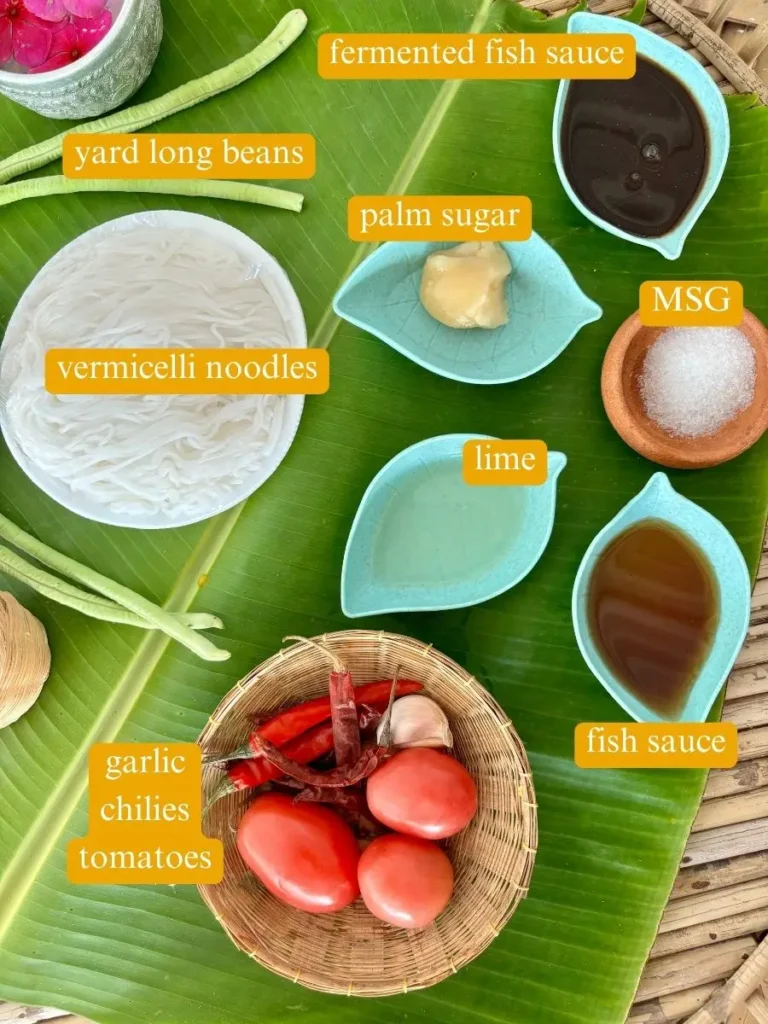
Ingredients for cooking Khao Poon (Photo: Collected)
Some versions use fish as the main protein, while others use chicken, pork, or other locally available ingredients.
The use of fresh herbs and vegetables is particularly important because it gives Khao Poon its characteristic freshness.
>>> See more: Ping Kai (Lao Grilled Chicken): A Must-Try Specialty of Laos
4. How Is Traditional Khao Poon Prepared?
Making traditional Khao Poon involves several stages.
First, the fish or meat is cooked until tender. If fish is used, the flesh is separated from the bones and shredded into small pieces.
An aromatic paste is then prepared using ingredients such as lemongrass, galangal, garlic, shallots, and chilies. The paste is cooked before being combined with the protein and broth.
Coconut milk may be added to create a creamy and aromatic soup. The broth is simmered so that the flavors can blend together.
Finally, soft rice noodles are placed in a bowl and covered with the hot broth. Fresh vegetables and herbs are added on top or served separately, allowing diners to customize each bite.
5. What Does Khao Poon Taste Like?
The flavor of Khao Poon can be described as aromatic, savory, spicy, creamy, and refreshing.
The broth provides the dominant flavor, with lemongrass and other herbs contributing a fragrant citrus-like character. Chilies add heat, while fish sauce gives the soup a savory depth.
When coconut milk is used, it softens the intensity of the spices and gives the broth a creamy consistency. The fresh vegetables then provide crunch and freshness, preventing the dish from feeling too heavy.
The final result is a satisfying bowl of noodles with several contrasting flavors and textures in every bite.
6. Khao Poon and Lao Food Culture
Khao Poon is more than just a noodle soup. It is closely connected with everyday Lao food culture and communal dining.
Like many traditional Lao dishes, Khao Poon is often served with a variety of fresh vegetables and herbs. Diners can add the ingredients they prefer, creating a personalized combination of flavors.

Khao Poon (Photo: Collected)
The dish is commonly found at local markets, food stalls, family gatherings, celebrations, and casual restaurants. This makes it a particularly interesting food for travelers who want to experience the everyday side of Laos rather than only eating at tourist-oriented restaurants.
>>> See more: Sien Savanh: Discover Laos’ Traditional Beef Jerky
7. Khao Poon vs. Khao Piak Sen: What Is the Difference?
Travelers sometimes confuse Khao Poon with Khao Piak Sen, another popular Lao noodle dish.
The two dishes are quite different.
Khao Poon is generally associated with soft rice noodles and a strongly aromatic curry-style broth, often accompanied by fresh vegetables and herbs.
Khao Piak Sen, on the other hand, is a comforting Lao noodle soup made with thicker, chewy rice noodles and a lighter broth. The noodles have a distinctive soft and slightly sticky texture.
If you enjoy Lao noodle dishes, trying both is an excellent way to appreciate the diversity of traditional Lao cuisine.
8. What Is Khao Poon Usually Served With?
One of the defining characteristics of Khao Poon is the selection of fresh accompaniments served with the noodles.
Depending on the restaurant or region, you may find:
- Fresh lettuce
- Bean sprouts
- Shredded cabbage
- Long beans
- Cucumber
- Banana blossom
- Fresh mint
- Coriander
- Thai basil
- Lime
- Fresh chilies
These ingredients can be added directly to the bowl or enjoyed alongside the noodles.
The fresh vegetables provide a crunchy texture and refreshing flavor that balances the rich broth.
9. Where Can You Try Khao Poon in Laos?
Travelers can find Khao Poon in many parts of Laos, especially at local markets and traditional restaurants.
9.1. Vientiane
The capital is a convenient place to explore Lao noodle dishes. Local markets and casual restaurants often serve Khao Poon alongside other traditional specialties.

Han Sam Euay Nong restaurant serves Khao Poon. in Vientiane (Photo: Collected)
For visitors staying in Vientiane, trying Khao Poon at a local market can be a great way to experience authentic Lao food culture.
9.2. Luang Prabang
Luang Prabang is one of the best destinations in Laos for travelers interested in traditional cuisine. The city’s markets and restaurants offer a wide range of Lao specialties, and Khao Poon can be found in local food establishments.
Pairing Khao Poon with other northern Lao dishes can turn a simple meal into a broader culinary exploration of the region.
9.3. Local Markets
For a more authentic experience, look for Khao Poon at morning markets and local food stalls.
These small vendors often prepare the soup in large pots, allowing diners to enjoy freshly prepared noodles with a selection of vegetables and herbs. Eating at a market also gives travelers an opportunity to observe how local people enjoy the dish in their everyday lives.
10. How Much Does Khao Poon Cost in Laos?
The price of Khao Poon depends on the location, ingredients, and type of restaurant.
Local food stalls and markets are generally the most affordable places to enjoy a bowl. Restaurants in major tourist destinations may charge more, particularly when they use larger portions or premium ingredients.
For travelers on a budget, Khao Poon is an excellent choice because it is filling, flavorful, and commonly available at affordable local eateries.
>>> See more: Khao Jee – A Cultural Delight of Laos Cuisine
11. Tips for Eating Khao Poon Like a Local
If you are trying Khao Poon for the first time, a few simple tips can make the experience even better.
Start with the broth. Taste the soup before adding extra chili or lime so you can appreciate its original balance of flavors.
Add fresh vegetables gradually. The vegetables are an essential part of the dish and create a refreshing contrast with the warm broth.
:quality(75)/cac_loai_rau_an_song_4_d7fa6d2485.jpg)
Add fresh vegetables gradually. (Photo: Collected)
Adjust the spice level. If you enjoy spicy food, fresh chilies can add considerably more heat. If you prefer milder flavors, start with a small amount.
Try it with herbs. Fresh mint, coriander, and other herbs can dramatically change the aroma and flavor of each bite.
Eat it fresh. Khao Poon is best enjoyed soon after the noodles and hot broth are combined.
12. Why Should You Try Khao Poon in Laos?
There are many reasons to add Khao Poon to your Laos food itinerary.
First, it is an excellent example of the country’s love for rice noodles, aromatic herbs, and bold flavors. Second, the combination of hot broth and fresh vegetables creates a satisfying balance that is different from many other Southeast Asian noodle dishes.
Most importantly, Khao Poon offers travelers an opportunity to experience a dish that is deeply connected with everyday Lao food culture.
Rather than being simply a meal for tourists, it is the kind of food that can be enjoyed at local markets, family gatherings, and casual eateries across the country.
13. Final Thoughts: Discover the Flavor of Traditional Khao Poon
Khao Poon is one of the must-try traditional foods in Laos. Its soft rice noodles, aromatic curry broth, tender protein, fresh vegetables, and fragrant herbs come together to create a comforting and flavorful meal.
Whether you discover it at a bustling market in Vientiane, a local eatery in Luang Prabang, or a small food stall elsewhere in Laos, Khao Poon offers a delicious introduction to the country’s rich culinary heritage.
For anyone planning a trip to Laos, exploring local cuisine is an essential part of the journey. Alongside famous dishes such as Laap, Tam Mak Hoong, Khao Niaw, Mok Pa, and Ping Kai, make sure to add Khao Poon to your list of must-try Lao foods.
>>> See more articles:
Laos Travel – Hidden Beauty and Captivating Destinations Every Traveler Should Explor
Or Lam – The Soul-Warming Traditional Stew of Luang Prabang, Laos
Laos Cuisine: Sticky Rice and Noodle Soups