





Lung Cu flag tower Ha Giang : Complete travel guide

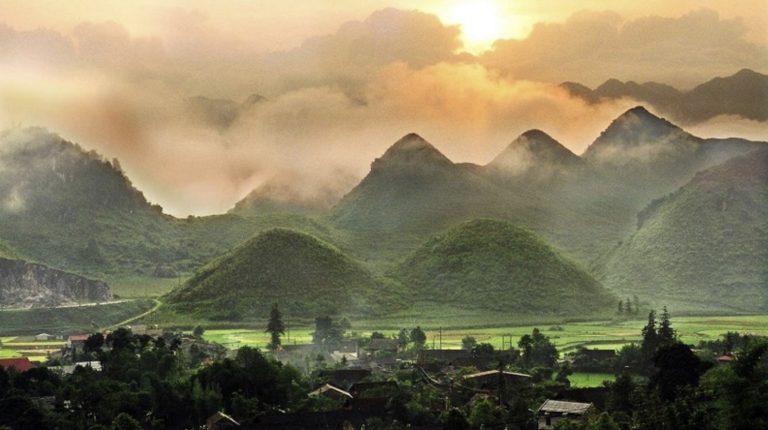
Hidden among the majestic mountains of Ha Giang, Lung Cu Flag Tower proudly marks Vietnam’s sacred northernmost point. More than a symbol of national sovereignty, it offers breathtaking scenery, vibrant local culture, and an unforgettable journey along winding mountain roads.
If you are planning a trip to Lung Cu Flag Tower, this guide provides useful information about its location, history, best time to visit, transportation, things to do, and nearby attractions.
Overview of Lung Cu flag tower
Lung Cu Flag Tower is more than a geographical landmark. It is a sacred symbol of Vietnam’s national sovereignty and a fascinating destination that attracts visitors with its majestic landscapes, rich history, and vibrant local culture.
1. Where Is Lung Cu flag tower?
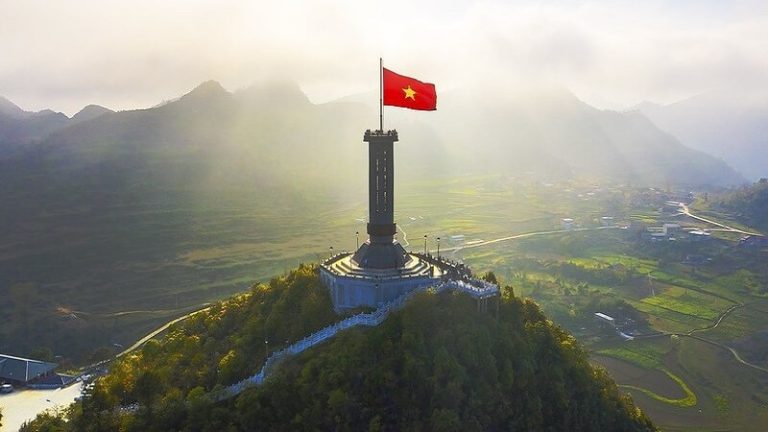
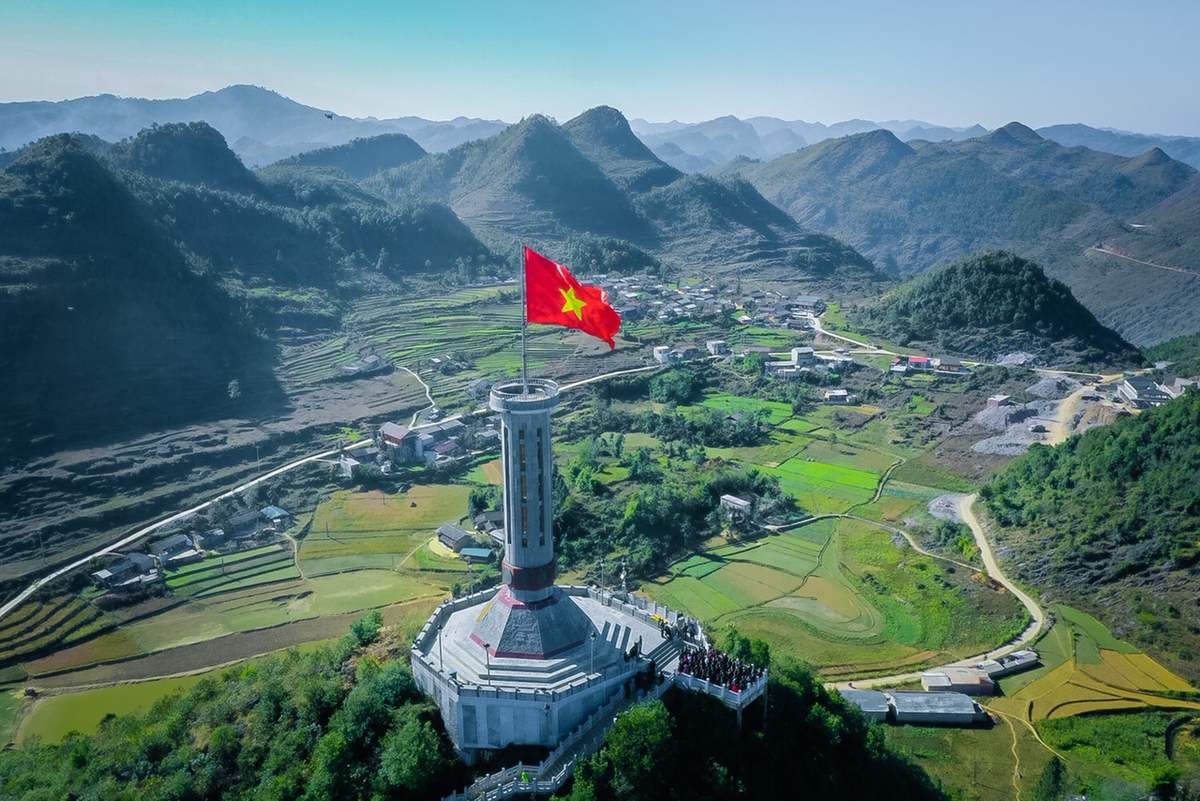
Lung Cu Flag Tower is located in Dong Van District, Ha Giang Province, approximately 24 km from Dong Van Town and about 470 km from Hanoi. Standing at an elevation of nearly 1,470 meters, the tower overlooks rugged limestone mountains and rolling hills. On clear days, visitors may even enjoy views stretching toward Yunnan Province, China.
At the foot of the tower are two mysterious lakes, traditionally believed by local people to resemble the “eyes of the dragon.” Filled with water year-round, they add to the unique charm of this remarkable destination.
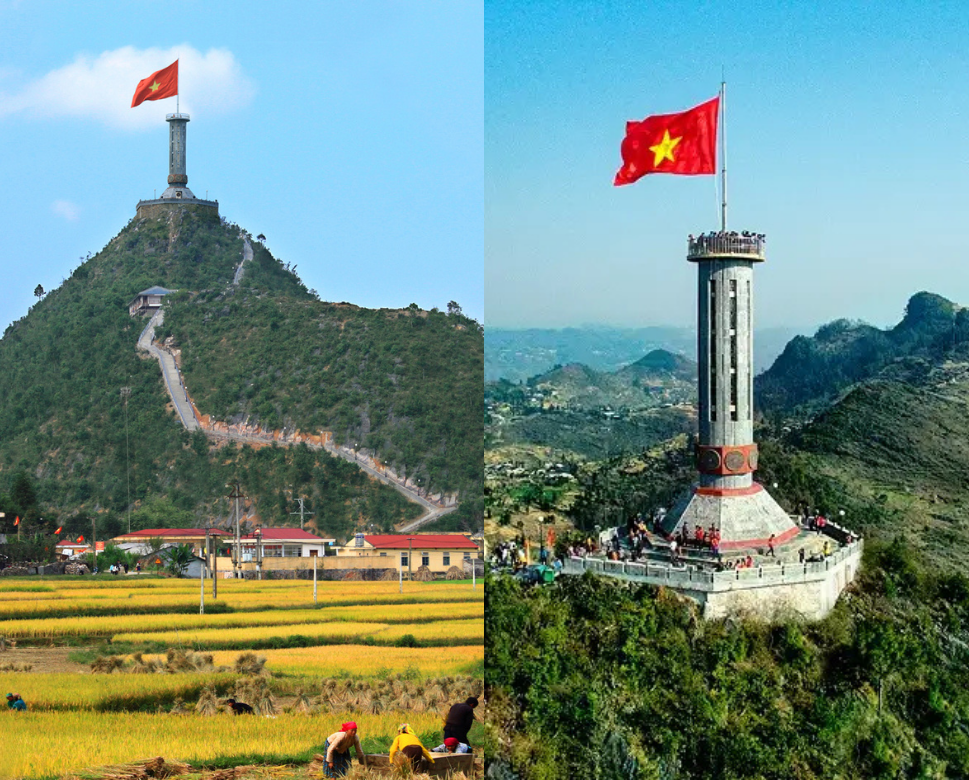
Inspired by the architecture of Hanoi Flag Tower, Lung Cu Flag Tower stands 34.85 meters high. The national flag flying at the top measures 54 square meters, symbolizing the unity of Vietnam’s 54 ethnic groups.
The tower’s octagonal structure is decorated with eight bronze-drum reliefs and eight stone reliefs, depicting important historical events and traditional cultural features of the ethnic communities in Ha Giang. Together, these elements make Lung Cu Flag Tower not only a symbol of national sovereignty but also a remarkable cultural and historical landmark.
2. The history behind Lung Cu flag tower
According to historical records, the origins of Lung Cu Flag Tower can be traced back to the Ly Dynasty, when General Ly Thuong Kiet is said to have raised the first flag on Dragon Mountain to affirm Vietnam’s sovereignty over the northernmost region.
During the Tay Son Dynasty, Emperor Quang Trung recognized the strategic importance of this borderland and established a military outpost here. A bronze drum was placed beneath the watchtower, and three sets of three drumbeats were sounded each night to affirm territorial sovereignty. The area gradually became known as Long Co, meaning “Dragon Drum.”
In 1978, the border guards erected the first official flagpole-a 12-meter-tall sa moc wooden pole carrying a 1.2-square-meter flag. A year later, during the northern border conflict, the site became an important military position.
In 2000, Ha Giang Province replaced the wooden pole with a more durable reinforced-concrete structure. The current 34.85-meter-high flag tower was completed in 2010.
Today, the national flag is replaced regularly each month. Retired flags are presented to veterans or displayed in museums, preserving the heritage and historical significance of Lung Cu as a proud symbol of Vietnam’s national sovereignty.
3. Entrance fees and opening hours at Lung Cu flag tower
Visiting Lung Cu Flag Tower is an affordable experience suitable for travelers of all ages :
- • Entrance fee: VND 25,000 (approximately USD 1) per adult. Free for children under 1.3 meters tall.
- • Electric shuttle service: VND 15,000 (approximately USD 0.63) per trip. Free for children under 5 years old.
- • Opening hours: 8:00 AM – 5:00 PM, Monday to Sunday.
Note: Fees and opening hours may change, so visitors should check the latest information before traveling.
4. How to reach the top of Lung Cu flag tower
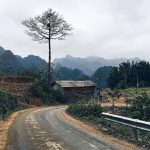
Reaching the foot of Lung Cu Flag Tower is already an exciting part of the journey. While the famous Ha Giang route is a popular choice, experienced travelers often recommend DT182, a quieter and more scenic alternative.
Once at the foot of the tower, visitors need to climb 839 stone steps, divided into three sections with resting points along the way. For those who want to save energy, the electric shuttle service can reduce the walking distance to around 200 steps.
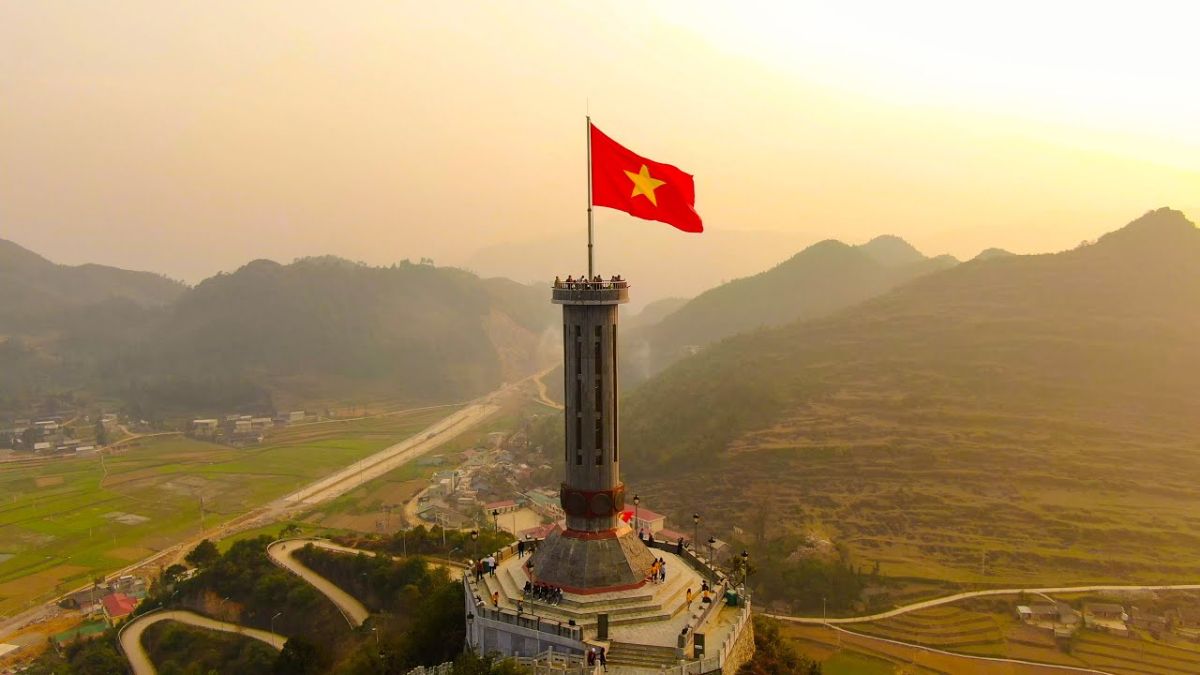
For travelers looking for a scenic journey, DT182 offers a quieter and more picturesque alternative to the main Ha Giang route. At the summit, the octagonal flag tower stands proudly, decorated with Dong Son drum motifs and historical stone reliefs.
Above it, the 54-square-meter national flag flies proudly over Dragon Mountain, offering breathtaking views of the surrounding mountains and valleys stretching toward the Chinese border.
Best time to visit Lung Cu flag tower
Lung Cu Flag Tower offers spectacular scenery throughout the year, but the best time to visit depends on the experience you are looking for :
- • Spring (February – April): A wonderful time to admire blooming peach blossoms and buckwheat flowers, which add vibrant colors to the mountain landscape.
- • Autumn (September – November): Often considered the best season, with clear skies, pleasant weather, and golden rice terraces stretching across the hillsides.
- • Avoid the rainy season (June – August): Heavy rainfall can make mountain roads slippery and hazardous. Landslides may also occur, so this period is best avoided unless you are an experienced mountain-road rider.
Must-Try activities at Lung Cu flag tower
Beyond admiring the iconic flag tower, Lung Cu offers unforgettable experiences for adventurous travelers. From hidden viewpoints to historical landmarks, here are some activities you should not miss:
1. Discover a hidden scenic viewpoint
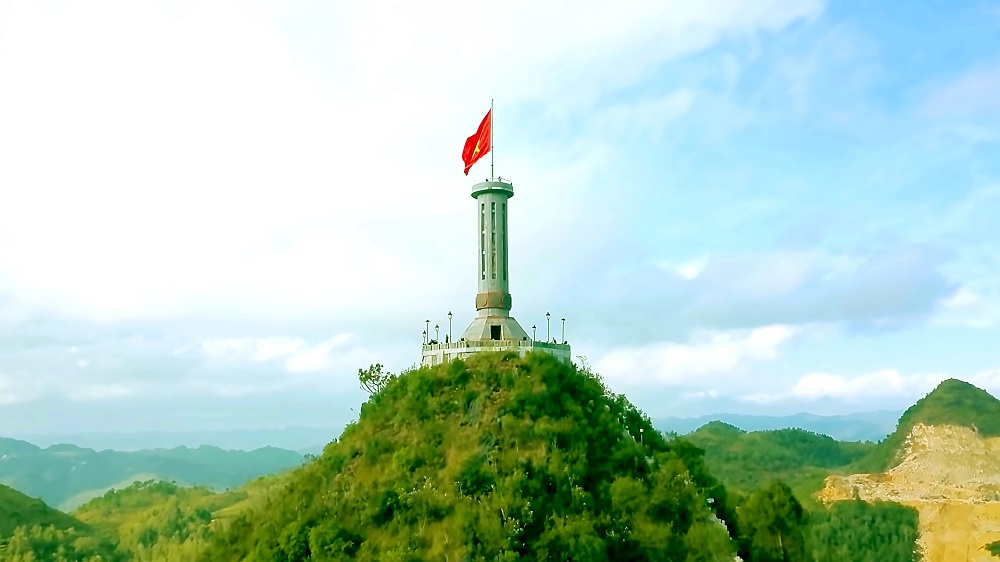
Most visitors stop at the main viewing area for photos, but locals recommend taking a short walk up a nearby hill for a spectacular 360-degree panoramic view.
This hidden viewpoint overlooks terraced rice fields, winding mountain roads, and distant peaks, making it an ideal spot for photography, especially at sunrise or sunset. The walk takes only around 10–15 minutes, rewarding you with a peaceful setting away from the crowds.
Cost: Free
Tips :
- • Ask locals for directions as the trail is not clearly marked.
- • Visit early in the morning or late afternoon for the best lighting.
- • Wear comfortable hiking shoes for a safer and easier walk.
2. Admire the unique architecture of Lung Cu flag tower
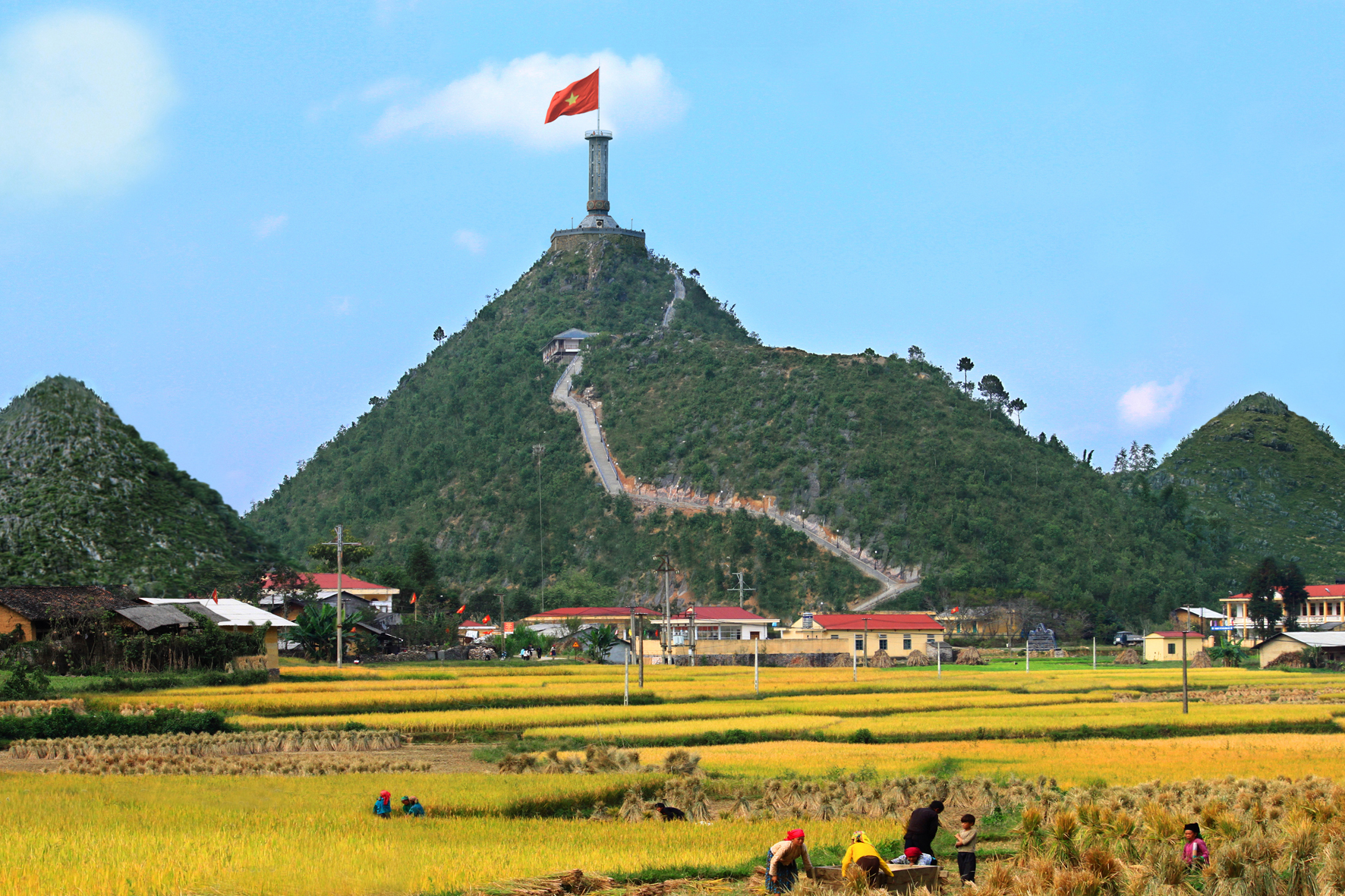
Lung Cu Flag Tower is not only a national symbol but also an impressive architectural landmark. Inspired by the Hanoi Flag Tower, it features an distinctive octagonal design, with its base decorated with intricate Dong Son bronze drum motifs and stone reliefs depicting important chapters of Vietnam’s history.
Standing beneath the national flag is a proud and emotional moment for many visitors. The tower’s detailed decorations and deep cultural significance make it a must-visit destination for travelers interested in Vietnamese history, architecture, and heritage.
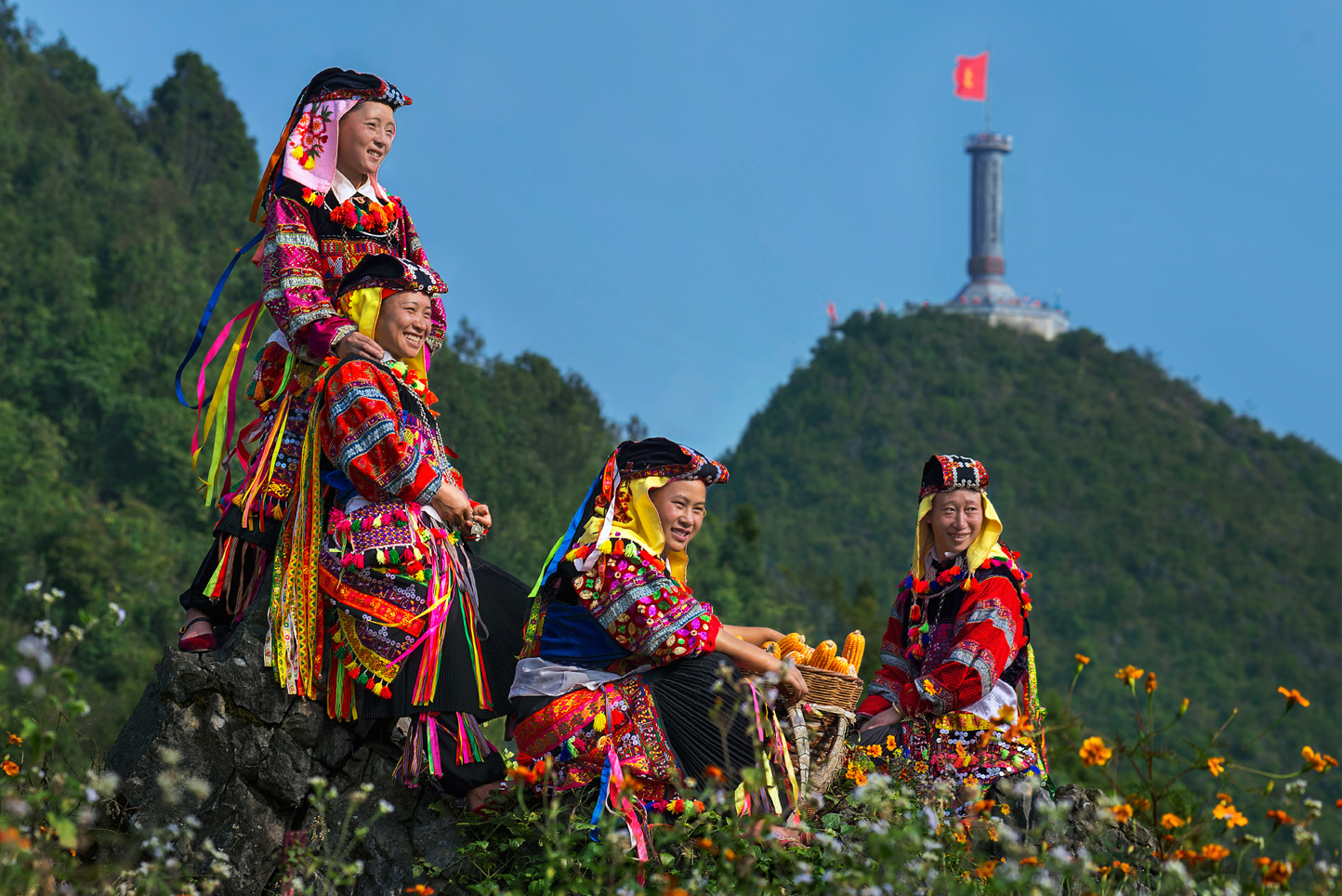
3. Discover the “True Northernmost Point”
While Lung Cu Flag Tower is considered the symbolic northernmost landmark of Vietnam, the actual geographic northernmost point is located in Xeo Lung, approximately 3.3 km away. Marked by a simple stone border marker known as Border Marker 428, this remote location receives relatively few visitors and retains its pristine, untouched beauty.
The trek to Border Marker 428 can be challenging, requiring a local guide to navigate the rugged terrain. However, those who complete the journey are rewarded with a unique sense of adventure and accomplishment.
Cost: Local guide fees typically range from VND 200,000–500,000 (approximately USD 8–20).
Tips:
- • Always take this route with a local guide, as the trail is not clearly marked.
- • Wear suitable hiking shoes and bring enough drinking water.
- • The best time to visit is during the dry season (September–April) to avoid slippery trails.
Must-Try local foods near Lung Cu flag tower
A trip to Lung Cu, Ha Giang is not complete without sampling the region’s distinctive local specialties. These dishes offer a taste of the traditional flavors and culinary culture of northern Vietnam:
- • Lo Lo Corn Wine: A traditional spirit made by the Lo Lo people using time-honored fermentation techniques. Natural yeast and spring water create a smooth yet strong drink, often served during festivals or offered to honored guests.
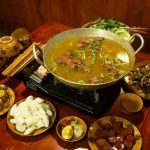
- • Thang Co: A signature dish of the H’Mong people, traditionally prepared with horse meat and offal simmered with local herbs and spices in a large pot. Traditionally cooked over an open fire, it has a rich, distinctive flavor and is often enjoyed with a glass of corn wine.
- • Men Men: A staple dish of several ethnic communities in Ha Giang, made from finely ground corn and steamed until soft and fluffy. It is commonly served with thang co, stir-fried vegetables, or pork dishes.
- • Buckwheat Cake: Made from Ha Giang’s famous buckwheat flowers, this local specialty has a soft, slightly chewy texture and a mildly nutty flavor. It is often grilled or lightly fried, making it a popular local snack.

Top attractions near Lung Cu worth visiting
Lung Cu Flag Tower is more than a standalone attraction; it serves as a gateway to Ha Giang’s rich cultural heritage, fascinating history, and spectacular mountain landscapes. If you have extra time, these nearby destinations are well worth exploring:
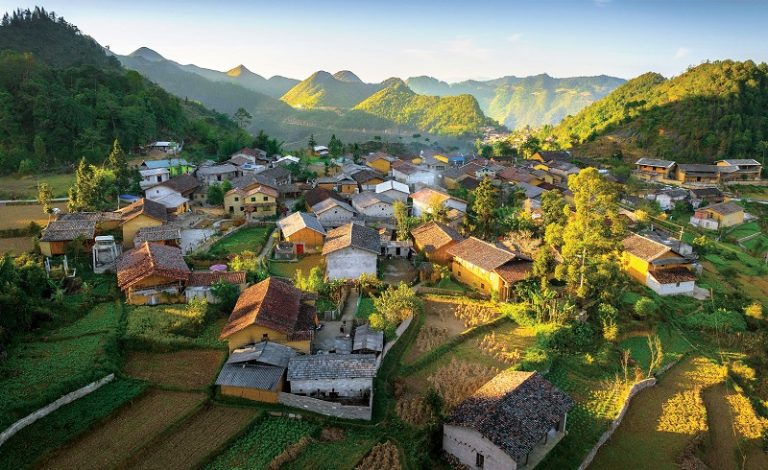
- • Lo Lo Chai Village: A charming ethnic village located at the foot of Lung Cu Flag Tower. Visitors can experience traditional local life, admire the Lo Lo people’s distinctive rammed-earth houses, and enjoy vibrant cultural festivals.
- • H’mong King’s Palace (Vuong Family Mansion): An early 20th-century architectural landmark featuring an impressive combination of wood and stone. It was once the residence of Vuong Chi Sinh, a prominent H’mong leader in the region.
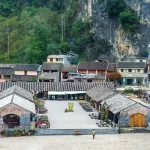
- • Dong Van Old Quarter: A historic town with more than a century of history, featuring traditional stone and wooden houses influenced by Chinese and French architecture. The lively night market, illuminated by colorful lanterns, adds to its charm.
- • Sung La Valley: Known as the “land where rocks bloom,” this picturesque valley is a must-visit destination. It is especially beautiful from October to April, when buckwheat flowers and other seasonal blossoms add vibrant colors to the Ha Giang landscape.
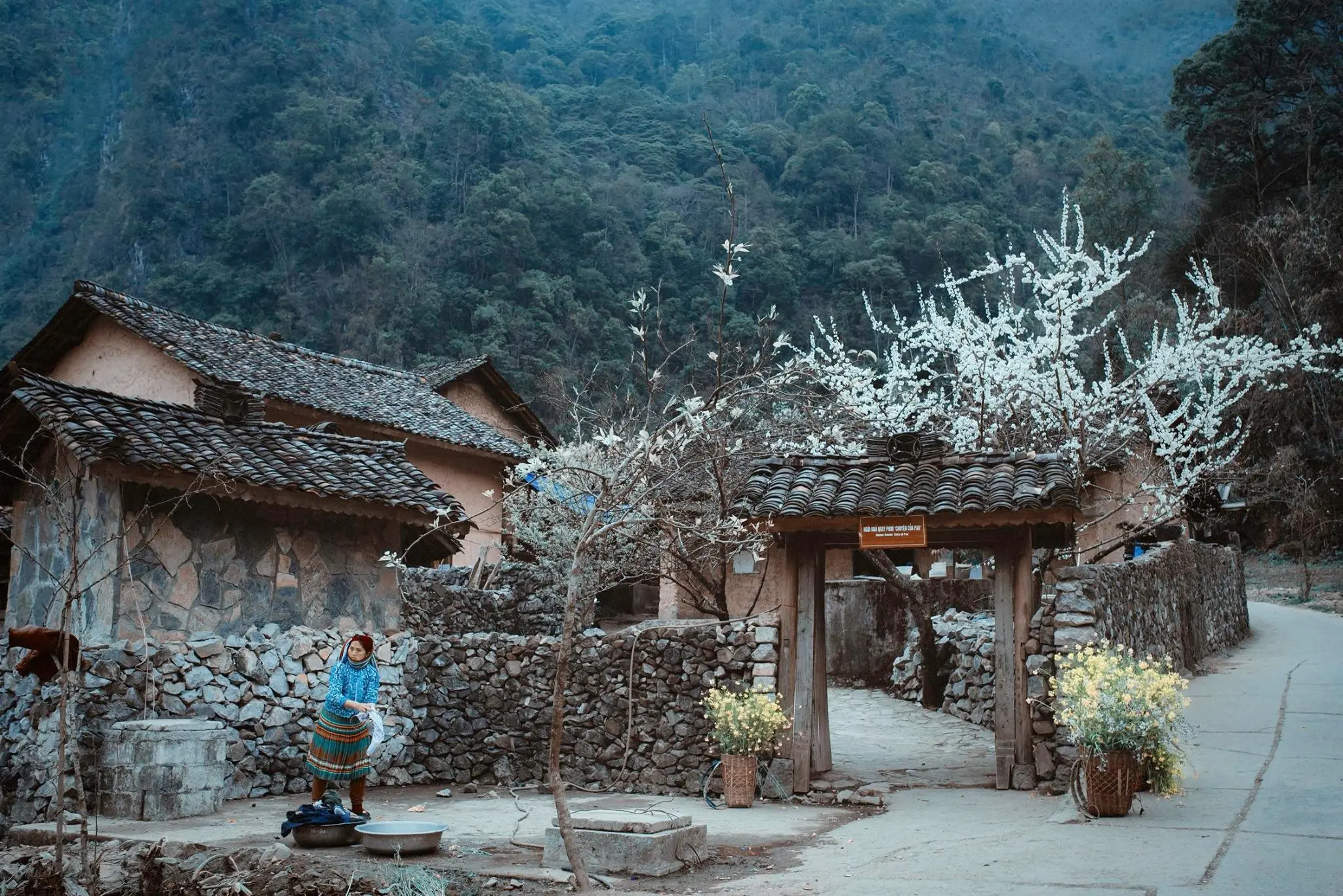
Lung Cu Flag Tower is a powerful symbol of Vietnam’s national sovereignty and a must-visit destination for travelers seeking breathtaking landscapes and rich cultural experiences. Whether climbing the 200 steps, exploring ethnic villages, or tasting Ha Giang’s unique local cuisine, every moment in Lung Cu offers an unforgettable adventure. For the best experience, plan your visit during the most beautiful seasons, explore nearby attractions, and immerse yourself in the authentic local way of life.
You can check out the 5-day, 4-night Ha Giang itinerary here.
Focus Asia Travel – Your Trusted Travel Partner in Ha Giang
Planning a trip to Ha Giang ? Focus Asia Travel is here to help you create a smooth, enjoyable, and hassle-free travel experience. Whether you’re looking for customized tours, transportation, accommodation, or local travel advice, our experienced team is ready to assist you every step of the way.
Contact Focus Asia Travel for a free consultation
📞 Hotline: +84 78 2323 879 | +84 93 6179 995 | +84 93 645 9995 | +84 79 3113 879
📧 Email: sales@focusasiatravel.com | sales@focusasiatravel.vn
Our dedicated travel consultants are always available to help you choose the best travel solutions, ensuring your journey is convenient, memorable, and cost-effective.