





Explore the National Museum of Cambodia

If you are a person who loves exploring culture and history, you cannot miss the National Museum Cambodia when visiting the land of pagodas and towers. The National Museum of Cambodia is one of the most famous Cambodian museums. This place preserves thousands of rare antiques, representing each period of formation and development of Cambodia. The museum has existed for more than a millennium, undergoing many restorations but still retains the ancient, majestic and splendid features of the ancient Khmer kingdom.
Let’s explore with Focus Asia Travel the National Museum of Cambodia associated with Cambodian history and gather the necessary information before visiting this place!
1. Where is the National Museum of Cambodia?

National Museum of Cambodia (Photo: Collected)
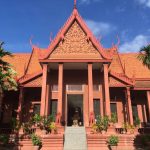
The National Museum of Cambodia is located north of the Royal Palace, on Preah Ang Eng Street (Road 13), in the capital Phnom Penh, Cambodia. The museum is home to the world’s largest collection of Khmer works of art with more than 14,000 artifacts, containing a treasure of Cambodian culture, history and people through the ages.
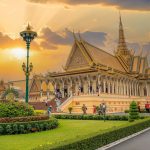
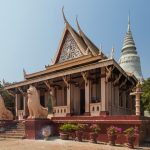
From a distance, you can easily recognize the National Museum of Cambodia with its characteristic red sandstone color and curved tiled roof architecture carved with exquisite Khmer motifs. That red color makes the museum appear most majestic and splendid at sunset, when it blends with the pink and purple of the afternoon sun.
2. Some details about the history of the formation of the National Museum of Cambodia
The National Museum of Cambodia was built in the early years of the 20th century (1917 – 1920) during the French colonial period, designed by two French architects George Groslier and École des Arts Cambodgiens.
George Groslier and his two children (Photo: Collected)
Therefore, the museum has a very unique blend of French and Cambodian architectural styles. The museum was inaugurated by King Sisowath in 1920 during the Khmer New Year.
The National Museum of Cambodia is a place to store and display archaeological, religious and artistic artifacts from the 4th to 13th centuries of Cambodia.
When visiting here, visitors not only understand more about the culture, history and life of the ancient Khmer people, but also admire their ingenious minds in creating and preserving artifacts that are almost still in existence. intact to this day. The museum clearly shows the religious life of Cambodian people through the ages.
The original religion was Brahmanical belief with 3 supreme gods: Vishnu, Shiva and Brahma. Then the first Shakyamuni Buddha statues began to appear in the post-Angkorian period.
The museum displays artifacts according to four historical milestones: prehistoric, pre-Angkorian, Angkor and post-Angkorian. With 8 galleries: Bronze Gallery, Prehistory Gallery, Pre-Angkorian Gallery, Angkorian Gallery, Post-Angkorian Gallery, Temporary Exhibition Gallery, Conservation and restoration workshops, and Ceramics Gallery.
3. Explore the National Museum of Cambodia
At the National Museum of Cambodia, antiques are arranged according to each historical period, making it easy for visitors to visit and learn about the history of this country.
3.1. Explore the museum’s exhibits
-
Bronze Gallery bronzeware display area: This is the first area of the Museum, displaying bronze artifacts found from the 7th to the 20th centuries. Due to the need for spiritual and religious aspects, the tradition of bronze casting was born to casting idols and Buddha statues.
-
Prehistory Gallery: You will learn more about Cambodia’s prehistory through ancient stones, weapons and bronze tools.
-
Conservation and restoration workshops”: The highlight of this area is the bust statue of Lord Visnu in a sleeping position. Although the statue’s body was damaged during the war, it still shows the sculpting talent and creativity of Cambodians thousands of years ago.
-
Pre-Angkorian Gallery: You will understand more about the pre-Angkorian period through the development of sculpture (from the 5th to the 8th century), typically the 8-armed statue of Vishnu.
-
Angkorian Gallery: Angkorian Gallery: This period is notable for giant half-human, half-animal statues, along with statues of Shiva.
-
Post-Angkorian Gallery: During this period, sculpting techniques developed to a new level: wooden statues were carved more delicately, decorations were encrusted with mother-of-pearl, ivory was frequently used in works, etc. ..
-
Ceramics Gallery: Display of daily objects made of ancient Khmer ceramics.
-
Temporary Exhibition Gallery: Unlike the remaining areas, this area displays modern works of cultural and historical significance such as traditional costumes and works crafted by artisans.

Cambodia’s Stolen Statues Are Coming Home to an Overflowing Museum (Photo: Collected)
3.2. Green campus surrounding the Museum
The museum is surrounded by the extremely cool green color of miniature landscapes and trees, helping to dispel the heat of the tropical climate. The ideal time to visit the museum is in the morning or afternoon, when the sunlight is not too harsh.
The inner courtyard also has 4 ponds planted with lotus and fish, creating a feeling of peace and relaxation.
3.3. Watch Cambodian Living Arts performances
Every day from 7:00 p.m. to 8:00 p.m., the National Museum of Cambodia will hold a traditional dance performance. Through dances, musicians and dancers will bring a journey from the Angkor palace to the daily lives of Cambodian people, helping you better understand their culture and lifestyle.
4. Experiences and notes when visiting the National Museum of Cambodia
-
Open time: from 8:00 a.m. to 5:00 p.m., with the last tickets sold at 4:30 p.m.
-
Entrance ticket price: 10 USD/person, including audio commentary for 5 USD. Free for children and school groups. The museum has both English and French tour guides.
-
Photography is not allowed in the exhibit area, but can still be taken inside and outside the museum.
-
The museum has a souvenir shop at the main entrance where you can buy postcards, replicas of sculptures, or books about art and culture.
-
The National Museum of Cambodia is located close to two other famous tourist attractions: the Royal Palace of Cambodia and the Silver Pagoda. You can combine visiting these 3 locations on the same day to save time and conveniently travel.
Read more:
Learn about Phnom Penh Travel Guides
Independence Monument in Phnom Penh, Cambodia
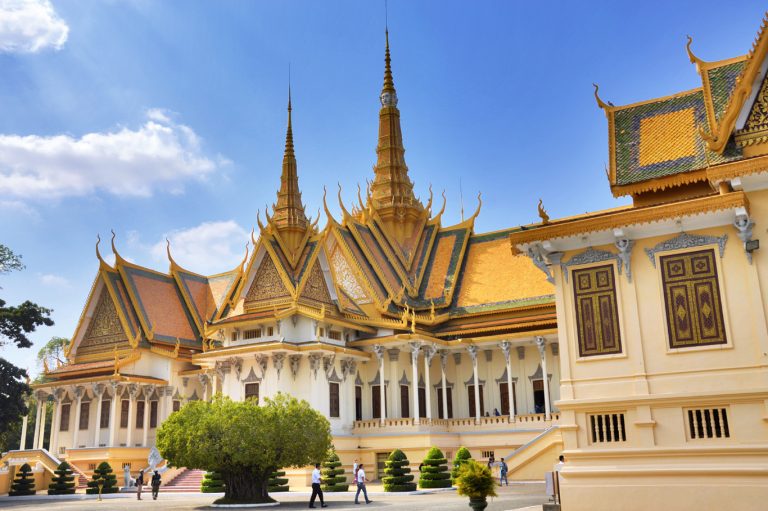
Royal Palace Phnom Penh: A historical witness to the Cambodian monarchy!