





Jokhang Temple – The Spiritual Heart of Tibet

For centuries, Jokhang has been considered the spiritual center of Lhasa, making it one of the most important destinations for anyone wishing to understand Tibetan Buddhism and the history of Tibet.
Table of Contents
Toggle🏯 The History of Jokhang Temple

Jokhang Temple was originally built during the 7th century, during the reign of King Songtsen Gampo, one of the most important rulers in Tibetan history.
According to tradition, the temple was built to house sacred Buddhist images brought to Tibet by the king’s wives from Nepal and China. Over the centuries, the temple was expanded and renovated by successive Tibetan rulers and religious leaders.
As a result, Jokhang today reflects a fascinating combination of Tibetan, Nepalese, Chinese, and Indian architectural influences.
Its long history has made it an important witness to the development of Tibetan Buddhism and the cultural exchanges that shaped the region.
🕉️ The Most Sacred Buddhist Temple in Tibet

The greatest spiritual treasure of Jokhang Temple is the revered statue of Jowo Rinpoche, a sacred image of the Buddha.
The statue is traditionally believed to have been brought to Tibet by Princess Wencheng, although historical traditions surrounding its origin are complex.
For Tibetan Buddhists, Jowo Rinpoche is considered one of the most sacred Buddhist images in the world.
Pilgrims travel long distances to Lhasa specifically to pray before the statue, making Jokhang an important destination for religious devotion and pilgrimage.
🛕 A Unique Blend of Architectural Styles

One of the most fascinating aspects of Jokhang Temple is its architecture.
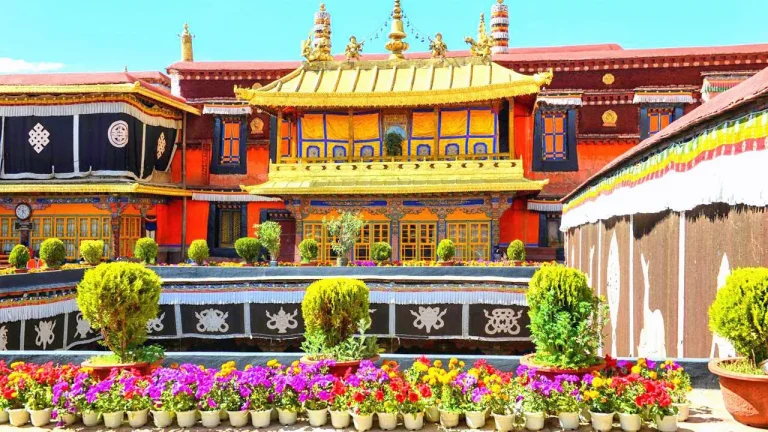
The complex combines traditional Tibetan Buddhist design with influences from Nepal, India, and China. Its golden roofs, decorative sculptures, colorful murals, prayer halls, and intricate details create a distinctive appearance that cannot easily be found elsewhere.
The temple’s golden rooftops shine under the intense Tibetan sunlight, creating a striking contrast with the surrounding mountains and ancient buildings of Lhasa.
🙏 Barkhor Street – The Pilgrimage Route

Jokhang Temple is surrounded by Barkhor Street, one of the most atmospheric areas in Lhasa.
For centuries, pilgrims have walked clockwise around the temple as part of a traditional Buddhist ritual known as kora.
Visitors can observe pilgrims turning prayer wheels, chanting mantras, carrying prayer beads, and performing prostrations along the pilgrimage route.
Walking around Barkhor allows travelers to witness Tibetan religious traditions not simply as historical displays, but as part of everyday spiritual life.
🏮 Prayer Wheels and Tibetan Spiritual Culture

One of the most recognizable elements around Jokhang is the traditional prayer wheel.
Devotees rotate prayer wheels while walking around the temple. These wheels are traditionally inscribed with Buddhist mantras and are an important part of Tibetan religious practice.
The sound of prayers, the movement of pilgrims, the turning wheels, and the scent of incense create an atmosphere that feels deeply spiritual.
For visitors, it is a chance to experience a side of Tibet that goes far beyond its spectacular mountain landscapes.
🎨 Ancient Murals and Religious Artwork

Inside Jokhang Temple are numerous traditional murals, sculptures, thangkas, and religious artworks.
Many of these works depict stories from Buddhist teachings, important figures in Tibetan history, and scenes connected with the introduction of Buddhism to Tibet.
The artwork provides valuable insight into Tibetan religious traditions and artistic techniques that have developed over centuries.
Visitors should remember that many areas inside the temple are sacred, so photography restrictions may apply.
🌄 Jokhang Temple and the Landscape of Lhasa

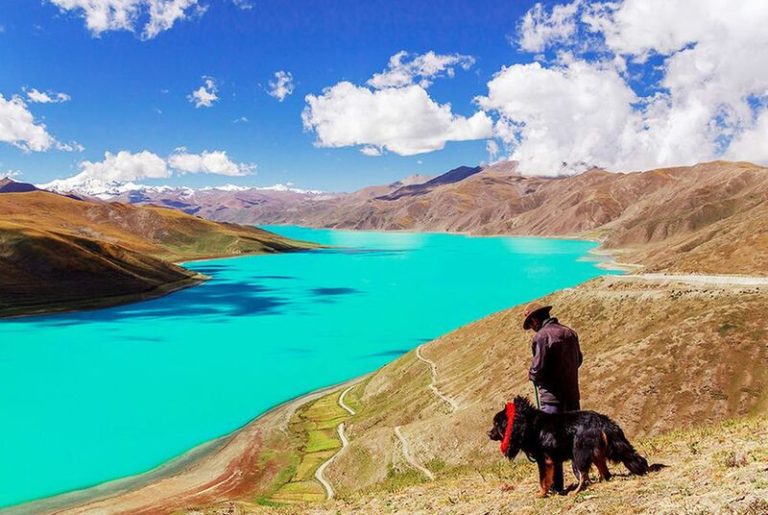
Jokhang Temple sits in the historic center of Lhasa, surrounded by the dramatic landscape of the Tibetan Plateau.
The city itself lies at an elevation of around 3,650 meters above sea level, giving the surrounding environment a unique high-altitude atmosphere.
From parts of the temple area, visitors can appreciate the traditional architecture of Lhasa against the backdrop of the vast Tibetan sky and surrounding mountains.
The combination of ancient temples, colorful prayer flags, and high-altitude scenery makes Lhasa one of the most distinctive destinations in Asia.
📿 The Experience of Tibetan Pilgrimage

Perhaps the most moving experience at Jokhang is observing the devotion of Tibetan pilgrims.
Some travelers spend hours or even days completing their pilgrimage around the temple. Others perform repeated full-body prostrations as an expression of faith.
These practices offer visitors a deeper understanding of the role Buddhism plays in Tibetan culture.
Rather than simply being a tourist attraction, Jokhang remains a living religious center, where centuries-old traditions continue to be practiced today.
📸 A Cultural Landmark in the Heart of Lhasa

Jokhang Temple is also one of the most memorable places for photography in Lhasa.
The golden roof, colorful prayer flags, ancient stone streets, pilgrims, and surrounding traditional buildings create countless opportunities for beautiful travel photographs.
Early morning and late afternoon are particularly atmospheric, when the sunlight creates warm tones across the temple’s golden rooftops.
✨ Why Should You Visit Jokhang Temple?
Jokhang Temple is not simply an ancient building—it is a place where history, faith, architecture, art, and everyday Tibetan life come together.
A visit allows travelers to walk through the historic streets of Lhasa, witness traditional pilgrimage rituals, admire centuries-old Buddhist artwork, and experience the profound atmosphere surrounding one of Tibet’s most sacred temples.
For travelers exploring Tibet, Jokhang Temple is an essential destination alongside the Potala Palace, Barkhor Street, Sera Monastery, and Drepung Monastery.
🏔️ Jokhang Temple – The Spiritual Heart of Tibet.
Step into the ancient world of Tibetan Buddhism, follow the pilgrimage route around Barkhor, and discover one of the most sacred cultural treasures of the Tibetan Plateau. 🙏✨