





Batu Caves – A Sacred Hindu Landmark of Malaysia


Located just outside Kuala Lumpur, Batu Caves is one of Malaysia’s most iconic cultural and religious landmarks. Famous for its enormous golden statue of Lord Murugan, colorful staircase, and spectacular limestone caves, this destination attracts visitors from around the world every year.
More than a beautiful sightseeing destination, Batu Caves is an important Hindu pilgrimage site, offering travelers an opportunity to discover Malaysia’s rich multicultural heritage while enjoying a truly memorable natural landscape.
🛕 The History of Batu Caves

Batu Caves is located within a series of enormous limestone hills believed to be around 400 million years old. The caves have long been known to local communities, but their importance as a Hindu religious site developed in the late 19th century.
In 1891, Indian Hindu leader K. Thamboosamy Pillai recognized the distinctive shape of the main cave entrance and dedicated the site to Lord Murugan, the Hindu god of war and victory.
A temple was subsequently established inside the cave, transforming Batu Caves into an important place of worship for Malaysia’s Hindu community.
Today, the site continues to preserve its religious importance while also becoming one of the country’s most visited attractions.
🟡 The Giant Lord Murugan Statue

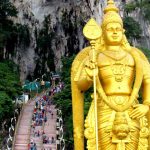
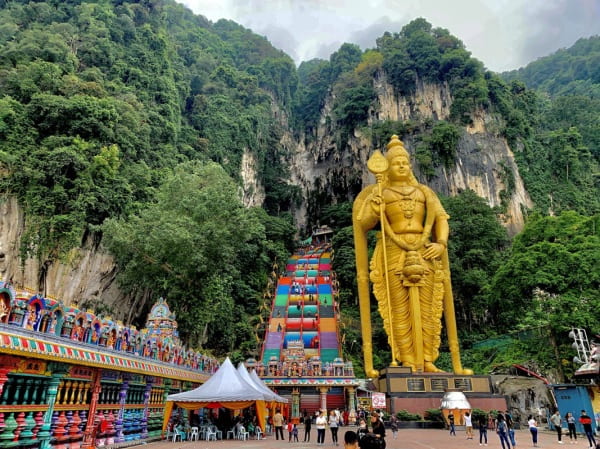
The first sight that catches every visitor’s attention is the enormous golden statue of Lord Murugan standing at the foot of the staircase.
Completed in 2006, the statue stands approximately 42.7 meters high, making it one of the world’s tallest statues dedicated to Lord Murugan.
Its brilliant golden color contrasts dramatically with the surrounding green limestone cliffs, creating one of the most recognizable images of Malaysia.
For travelers, standing at the base of the statue and looking up toward the colorful staircase is an unforgettable experience—and one of the most popular photo opportunities in Kuala Lumpur.
🌈 The Famous 272 Steps

To reach the main temple cave, visitors must climb 272 colorful steps carved into the hillside.
The staircase has become one of Batu Caves’ most recognizable features, especially after being painted in vibrant colors. Each step leads visitors higher toward the enormous limestone cave while offering increasingly beautiful views of the surrounding area.
The climb can be challenging, particularly under Malaysia’s tropical sun, but reaching the top is well worth the effort.
Along the way, visitors may also encounter the famous long-tailed macaques that live around the caves. They are entertaining to watch, but travelers should avoid feeding them or leaving food unattended.
🕉️ Inside the Temple Cave

At the top of the staircase lies the magnificent Temple Cave, a huge natural cavern containing Hindu shrines and colorful religious sculptures.
The enormous limestone walls and naturally formed rock formations create a dramatic setting unlike a conventional temple.
Inside, visitors can observe worshippers praying, lighting incense, and participating in religious rituals. The combination of natural cave formations and Hindu religious architecture makes the experience both visually impressive and culturally meaningful.
Visitors should remember that Batu Caves remains an active place of worship, so respectful clothing and behavior are recommended.
🪨 A Natural Wonder of Ancient Limestone

Beyond its religious significance, Batu Caves is also a remarkable geological site.
The limestone formations surrounding the temple are estimated to be around 400 million years old. Over an immense period of time, natural erosion created the caves, cliffs, chambers, and dramatic rock formations visible today.
Walking through these enormous caves gives visitors a fascinating perspective on the geological history of the region.
The contrast between the ancient limestone cliffs and the colorful Hindu statues makes Batu Caves particularly unique.
🎉 Thaipusam – The Biggest Festival at Batu Caves

Batu Caves becomes especially spectacular during Thaipusam, one of the most important Hindu festivals celebrated in Malaysia.
Thousands of devotees gather at the site to pray, fulfill religious vows, carry offerings, and participate in colorful processions. Some devotees carry elaborate structures known as kavadi, creating an extraordinary cultural spectacle.
The festival transforms Batu Caves into a vibrant center of music, prayer, tradition, and devotion.
For visitors interested in experiencing Malaysia’s multicultural identity, Thaipusam offers a remarkable insight into the country’s Indian Hindu heritage.
🐒 Meet the Monkeys of Batu Caves

Another unexpected attraction at Batu Caves is its population of long-tailed macaques.
The monkeys can often be seen around the stairs and temple grounds. Their playful behavior can make the visit even more entertaining, especially for families and children.
However, visitors should keep a safe distance, avoid touching them, and never intentionally feed them. Keeping food and personal belongings secure is also a good idea.
📸 One of Malaysia’s Most Instagrammable Landmarks

Batu Caves is undoubtedly one of the most photogenic destinations around Kuala Lumpur.
The combination of the giant golden Murugan statue, colorful staircase, dramatic limestone cliffs, and tropical greenery creates an instantly recognizable backdrop.
The best-known photograph is taken from the bottom of the staircase, capturing the statue and colorful steps together. Visitors can also take photographs from higher up, where the city and surrounding landscape can be seen in the distance.
🌿 A Unique Combination of Culture and Nature
What makes Batu Caves particularly fascinating is the way religion, history, architecture, and nature exist together in one destination.
You can begin your visit by admiring the giant Murugan statue, climb the 272 colorful steps, explore an ancient limestone cavern, observe Hindu shrines, and enjoy panoramic views—all within a single journey.
This combination makes Batu Caves very different from a typical sightseeing attraction.
✨ Why Should You Visit Batu Caves?
Batu Caves is a destination that offers much more than a beautiful photograph.
It allows travelers to discover an important part of Malaysia’s Hindu heritage, admire extraordinary limestone formations, experience traditional religious culture, and explore one of Kuala Lumpur’s most famous landmarks.
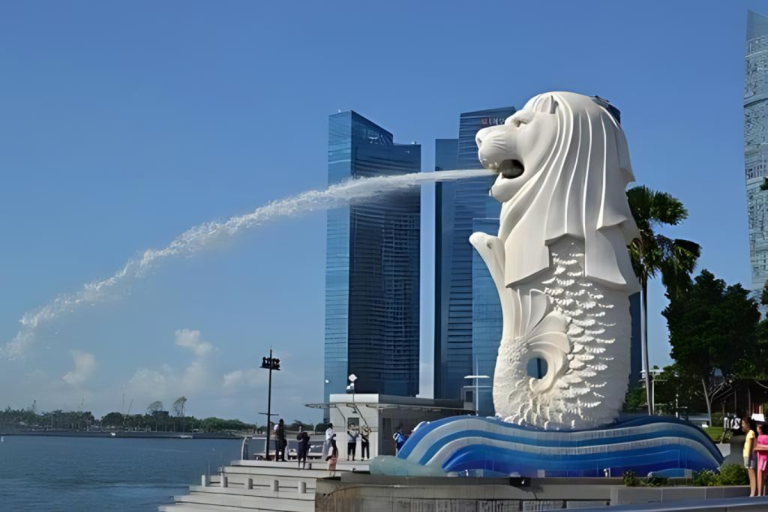
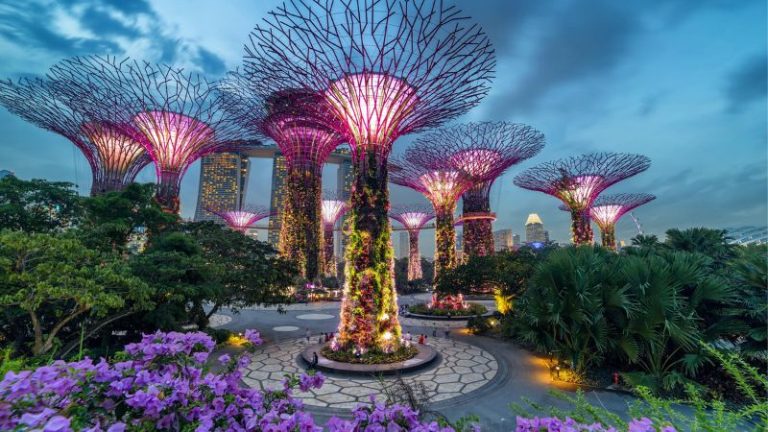
For travelers joining a Singapore – Malaysia itinerary, Batu Caves is an especially memorable stop. After experiencing Singapore’s modern skyline and futuristic attractions, Batu Caves introduces a completely different side of Southeast Asia—ancient caves, vibrant religious traditions, colorful architecture, and rich cultural diversity.
🇲🇾 Batu Caves – Where ancient nature meets vibrant Hindu culture.
Climb the colorful steps, admire the golden Lord Murugan, explore the mysterious limestone caves, and experience one of Malaysia’s most fascinating cultural landmarks. ✨