


“Táo Quân” – A traditional cultural program of Northern Vietnam.

The origin of the program “Táo Quân”

Launched in 2003, Táo Quân or Gặp nhau cuối năm (original name) meaning Year-End Gathering has become an essential spiritual tradition for Vietnamese families every Lunar New Year’s Eve. More than entertainment, it is a sharp current-affairs special reflecting social issues through humor and satire. Amid busy modern life, its witty laughter brings generations together. Families gather to watch Táo Quân during the sacred moment of bidding farewell to the old year.

The program “Táo Quân” has been deeply ingrained in the hearts and minds of people in northern Vietnam.

After 22 years, it has truly become a national program with a lasting impact on audiences.

In the first episode, artist Quốc Trượng played the Jade Emperor. Costumes were simple and rather modest at that time. A highlight was the casting of Nam Tào and Bắc Đẩu. Công Lý appeared tough and bald yet acted flamboyantly. Xuân Bắc looked scholarly but spoke loudly and confidently.
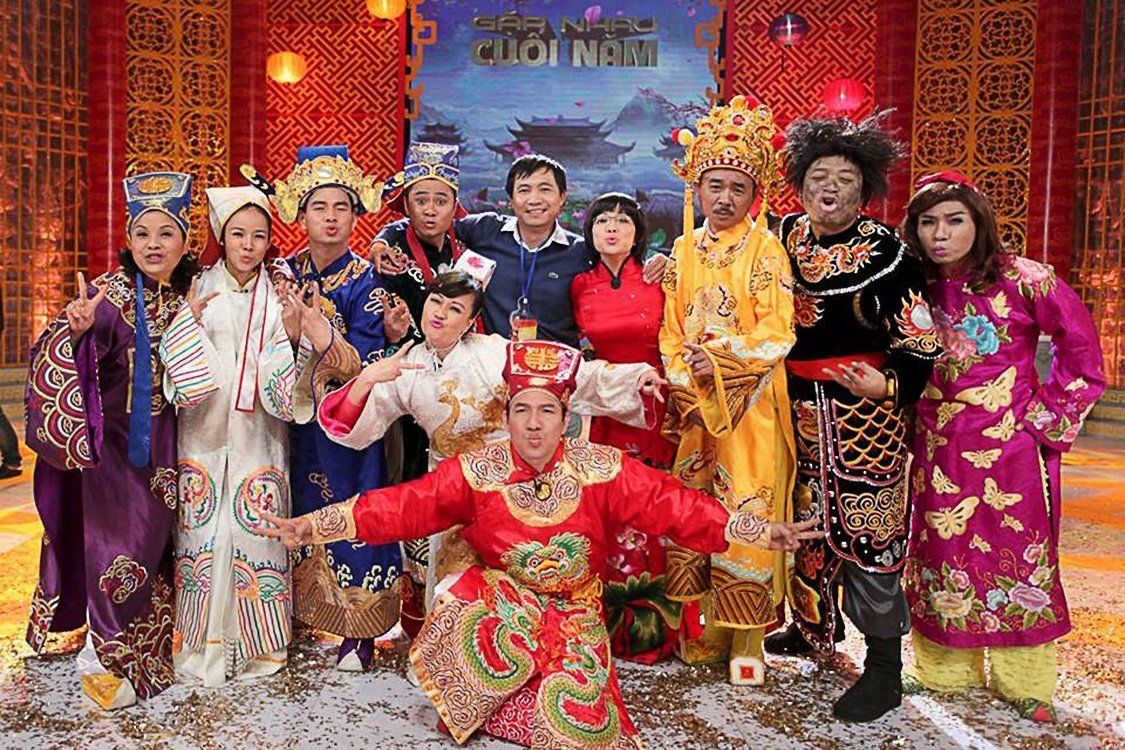
“Táo Quân” is a program that has made a strong impact on public opinion.

“Táo Quân” is a program that has made a strong impact on public opinion.

Over time, Táo Quân has undergone an impressive transformation in both content and presentation. Careful investment elevated the program’s quality year after year.

After more than two decades, it has reaped well-deserved success. Each season delivers sharp, witty performances with lasting aftertaste. The show leaves unforgettable impressions every Lunar New Year.

Audiences still remember the “Miss Táo” contest in 2009. The storyline parodied beauty pageants. In 2011, “Táo Idol” was inspired by Vietnam Idol.

The 2013 script drew from The Voice Vietnam. In 2015, it referenced Who Wants to Be a Millionaire and Wheel of Fortune. “Corruption Wheel” became the central theme in Táo Quân 2016.

Iconic parody songs also became annual highlights. Many still attract massive views on YouTube and social media.

The memories within Táo Quân help shape cherished traditional cultural values.

Audiences still vividly remember the song Flood from the City Crossroads in 2009. It followed the historic flooding in Hanoi that year.

In 2011, the parody song Going to School made people laugh through tears. Its lyrics included: “Yesterday I went to school, my friend nearly beat me to death.” “So many classmates filmed it, the whole school already knew.”

In 2013, Hoang Mang Style, adapted from Gangnam Style, was performed by Táo Kinh Tế. The line “A gloomy economic year” was both humorous and deeply reflective. It captured the country’s difficult economic period. Other memorable songs included Y Tế Xinh and Không Cảm Xúc by Táo Điện Lực.

Over the years, Táo Quân’s iconic lines became viral trends. They remain unforgettable to audiences of all generations.

In Táo Quân 2016, beyond the “corruption wheel,” many witty yet sharp lines stood out. “Clear water has no fish; overly good people have no friends.” “Sustainable poverty, corruption kept at a stable level.” “Getting rich without working means only one thing: fraud.” “People eat urea fish, oily vegetables, and drink phosphate tea.” “The rich are hated, the poor despised, the smart eliminated.” “Before, we needed a position; now, we need the right position.”

Táo Quân 2018 also delivered unforgettable quotes. “Life is full of twists; ginseng is rare, bamboo roots are plenty.” “Hold money and fear it falls; hold an A4 sheet and stay rich forever.”

Táo Quân has gradually become less engaging and faded in the era of youth-driven change.

Over the past decade, Táo Quân has gradually slowed down. Its sharp satirical edge was seen as fading, with content becoming less compelling. At times, the program struggled to balance political commentary and entertainment. It also faced challenges transitioning between veteran and younger performers.

In 2020, Táo Quân was paused after 16 consecutive years on air. Critics said the show lacked innovation. VTV replaced it with a comedy titled Làng Vũ Đại thời hội nhập. The new format featured Xuân Hinh as Chí Phèo and Thanh Thanh Hiền as Phó Đoan. Unlike Táo Quân, the show did not deeply review major annual issues. It focused on everyday life stories and social media phenomena. The storyline centered on Vũ Đại village’s journey of transformation in an era of integration.
It tells stories of tourism development, economic growth, and changing rural life. These stories are presented through theatrical language and familiar characters from literature and folklore.

The comeback brought many changes, yet it still did not fully resonate with the younger generation.

After 2020, Táo Quân returned with changes in content and cast. The show actively followed social media trends. New faces were added to refresh the reporting format. However, it was still seen as lacking breakthroughs. The program failed to create a strong impact as expected.

In 2022, the program was missing People’s Artists Công Lý and Xuân Bắc. In 2023, Táo Quân marked its 20-year journey with a beauty pageant–style script. The show reunited veteran artists associated for nearly two decades. They included Quốc Khánh, Công Lý, Xuân Bắc, Tự Long, and Chí Trung.However, the 20-year milestone was less dazzling than expected.

After airing, the show faced strong criticism despite some positive feedback. Many viewers said the content felt bland and repetitive. Some even suggested the program should end due to exhausted creativity. Associate Professor Nguyễn Thị Minh Thái noted the show lacked excitement in recent years. She suggested the team may have played it too safe under heavy scrutiny. Rising audience expectations may also have been hard to meet.

Táo Quân 2024 introduced changes in content, format, and cast. Yet it lacked sharp satire on major social issues. Despite efforts to innovate, the show was criticized as fragmented and less engaging.

Táo Quân regained audience favor in 2025.

By the 2025 season, Táo Quân truly made a comeback with a fresh format. The return of iconic artists like Tự Long, Chí Trung, Quang Thắng, and Vân Dung excited audiences. The show struck a chord by addressing timely social issues and viral online trends. These included administrative mergers, “đám giỗ bên cồn,” and the “Baby Three” trend. Pickleball also became a humorous highlight.

The music segment stood out in particular. Popular hits were rewritten with new lyrics, such as Don’t Hurt My Heart, Rebirth, and Turn Love On. Together, they created a vibrant and highly entertaining experience.

The program announced a temporary hiatus in 2026.

After its impressive revival, many expected Táo Quân to continue its momentum. However, on January 7, VTV announced the show would take a break after 22 years.

The news immediately sparked mixed public reactions. Some viewers supported the pause to allow renewal. Dương Tạ commented that stopping felt reasonable amid better alternatives today. He said the show mainly reflected and criticized issues without solving root causes.

Reader Mr. Tuấn agreed, calling for more practical change over satire. Others shared a more balanced view.

Nguyễn Văn Thanh admitted Táo Quân had been excellent for 20 years. He felt Tet would feel empty without it. Yet he believed good things must change to stay fresh. Pausing to seek new inspiration felt better than forced continuation. He hoped the show might return when ideas align again.

The sense of regret felt by long-time viewers.

On the other hand, this absence leaves a hard-to-fill void for many viewers.

Trí Hữu shared: “I hope Lunar New Year 2027 and many future Tet holidays will have Táo Quân again.”

For Lương Huệ, the regret comes with memories. “I remember New Year’s Eve 2019 without Táo Quân,” she said. “It rained heavily with thunderstorms and even hail in some places.” “Then Covid-19 broke out. Thinking back still feels sad.”

The sense of loss is clear in many families’ New Year plans. Hoàng Thị Hiền said she told her parents they would stay home to watch Táo Quân. She believed there were many social issues worth discussing this year. “Hearing the news now makes me really sad,” she added.

Lê Xuân Liêm shared a generational bond with the show. “I watched Táo Quân since secondary school,” he said. “Now my child is in secondary school too.” “It is an irreplaceable spiritual tradition every New Year’s Eve.” “If it disappears, it truly feels empty.”

Conclusion

Despite differing opinions, they all stem from affection for the show, not rejection. It is how audiences express love for a spiritual staple. Táo Quân has been a “Tet seasoning” for more than two decades.